I led them with cords of kindness, with the bands of love. (Hosea 11:4)
18
Jun
2026


I led them with cords of kindness, with the bands of love. (Hosea 11:4)

Problem: Christ is “the beginning of the creation of God” (KJV, NKJV, NASB).
Christ is “the ruler of God’s creation” (NIV).
Christ is “the Origin, Beginning and Author of God’s creation” (Amplified Bible).
Christ is “the Originator of God’s creation” (Holman Christian Standard Bible).

Come, my beloved, let us go out into the fields … Let us … See whether the vines have budded.
(Song of Solomon 7:11)

Peter writes that Jesus “made proclamation to the spirits now in prison, 20 who once were disobedient” (1 Pet. 3:19-20). What does this passage mean? Does it refer to Jesus going to hell in the three days between his death and resurrection?
Response:

We wish to see Jesus. (John 12:21)

In John 12:24, Jesus said concerning His approaching death, “Most assuredly, I say to you, unless a grain of wheat falls into the ground and dies, it remains alone; but if it dies, it produces much grain” (emp. added). The Law of Biogenesis says that in nature, life comes only from life of its own kind (Miller, 2012). Life cannot spontaneously generate or create itself. So, how could a grain which “dies,” subsequently produce living things? Does this phenomenon contradict the Law of Biogenesis? Did Jesus make a mistake? Was He ignorant of the scientific principle we call the Law of Biogenesis?

Consider my affliction and my trouble, and forgive all my sins. (Psalms 25:18)
Continue reading →
For this very night there stood before me an angel of the God to whom I belong. (Acts 27:23)
Continue reading →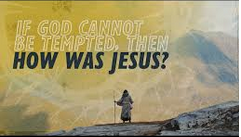
According to Scripture, Jesus was Deity in the flesh (John 1:1-5,14; 20:28). He was not sired by man; He was not conceived naturally by woman (Isaiah 7:14; Matthew 1:23). Rather, Jesus came from heaven (John 3:13; 6:38), proved His “mighty God” Messiahship (Isaiah 9:6) through a variety of verified miracles (John 20:30-31; cf. Lyons and Butt, 2006), accepted worship (Matthew 14:33; John 9:38), and claimed a unity with God the Father that even His enemies understood was a profession of Deity (John 10:30,33). Some, however, question the Bible’s consistency of Jesus being God. The argument goes something like this (cf. Wells, 2010): The Bible declares that Satan tempted Jesus (Matthew 4:1), and that Jesus was “in all points tempted as we are” (Hebrews 4:15). Yet, the Bible also declares that “God cannot be tempted by evil” (James 1:13). Therefore, the Bible (allegedly) contradicts itself regarding the nature of Jesus. How could He be God, if God cannot be tempted?
Continue reading →

Problem: The Bible clearly states that God cannot be tempted by evil, so why do other passages speak of God being tempted?

Problem: Leviticus 17:11 affirmed that God gave blood sacrifices “to make atonement” for our souls. But Hebrews seems to contradict that, insisting that the Aaronic priest “stands ministering daily and offering repeatedly the same sacrifices, which can never take away sins” (10:11).

Modern evangelical churches have spent the last twenty years trying very hard to prove something. Not that the gospel is powerful. Not that the Word of God is sufficient.
Continue reading →
Problem: “Without father, without mother, without descent, having neither beginning of days, nor end of life; but made like unto the Son of God; abideth a priest continually” (Hebrews 7:3)
There are some who identify Melchizedek as the pre-incarnate Christ. That is, they believe that Christ Himself appeared to Abraham in Genesis 14. This seems to be based primarily on a misunderstanding of the verse cited above (Heb. 7:3).

Problem: According to Scripture, Jesus was Deity in the flesh (John 1:1-5,14; 20:28). He was not sired by man; He was not conceived naturally by woman (Isaiah 7:14; Matthew 1:23). Rather, Jesus came from heaven (John 3:13; 6:38), proved His “mighty God” Messiahship (Isaiah 9:6) through a variety of verified miracles (John 20:30-31; cf. Lyons and Butt, 2006), accepted worship (Matthew 14:33; John 9:38), and claimed a unity with God the Father that even His enemies understood was a profession of Deity (John 10:30,33). Some, however, question the Bible’s consistency of Jesus being God. The argument goes something like this (cf. Wells, 2010): The Bible declares that Satan tempted Jesus (Matthew 4:1), and that Jesus was “in all points tempted as we are” (Hebrews 4:15). Yet, the Bible also declares that “God cannot be tempted by evil” (James 1:13). Therefore, the Bible (allegedly) contradicts itself regarding the nature of Jesus. How could He be God, if God cannot be tempted?

Heb. 1:8-12—“But as to the Son, Thy throne, O God, is forever and ever, and a sceptre of
uprightness is the sceptre of thy kingdom. Thou hast loved righteousness and hast hated
lawlessness; therefore God, thy God, has anointed thee with oil of gladness above thy companions.
And, Thou in the beginning, Lord, hast founded the earth, and works of thy hands are the
heavens. They shall perish, but thou continuest still; and they all shall grow old as a garment, and as
a covering shalt thou roll them up, and they shall be changed; but thou art the Same, and thy years
shall not fail.”