Problem: Jesus says, “I say to you, make no oath at all, either by heaven, for it is the throne of God” (Mt. 5:34). Does this mean that we, as Christians, cannot swear to “tell the truth” in a court of law? Are we allowed to make promises or vows during our weddings?
Month: May 2020
Matthew 5:31-32 What does this passage tell us about divorce and remarriage?
The context for this passage is the Sermon on the Mount, where Jesus raises the bar on the demands of the Law for salvation. It is in this context that he raises the bar on the ethics for divorce and remarriage, citing Deuteronomy 24:1.
(Mt. 5:31-32) It was said, ‘Whoever sends his wife away, let him give her a certificate of divorce’; 32 but I say to you that everyone who divorces his wife, except for the reason of unchastity, makes her commit adultery; and whoever marries a divorced woman commits adultery.
Matthew 5:29—Is hell the grave or a place of conscious torment?
Problem: Jesus refers here to the “body” being “cast into hell,” and the psalmist speaks of “bones” being “scattered at the mouth of hell [sheol]” (Ps. 141:7, kjv). Jacob talked about his “gray hairs” being brought down to hell (Gen. 42:38, kjv; cf. 44:29, 31). However, Jesus referred to hell as a place where the soul goes after one dies and is in conscious torment (Luke 16:22–23). Is “hell” just the grave, as the Jehovah’s Witnesses and some other cults claim?
Matthew 5:17–18 Did Jesus come to do away with the Law of Moses?
Problem: Jesus said very explicitly, “Do not think that I came to destroy the Law or the Prophets. I did not come to destroy, but to fulfill.” However, on one occasion Jesus approved of His disciples when they broke the Jewish law about working on the Sabbath (Mark 2:24), and Jesus Himself apparently did away with the ceremonial law by declaring all meats clean (Mark 7:19). Jesus’ disciples clearly rejected much of the OT law, including circumcision (Acts 15; Gal. 5:6; 6:15). Indeed, Paul declared that “You are not under law but under grace” (Rom. 6:14) and that the Ten Commandments engraved in stone have been “taken away in Christ” (2 Cor. 3:14).
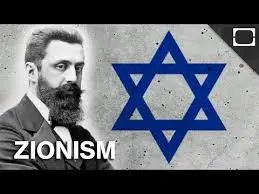
Zionism
The term “Zionism” was coined in 1890 by Nathan Birnbaum.
Its general definition [involves] the national movement for the return of the Jewish people to their homeland and the resumption of Jewish sovereignty in the Land of Israel.
Since the establishment of the State of Israel in 1948, Zionism has come to include the movement for the development of the State of Israel and the protection of the Jewish nation in Israel through support for the Israel Defense Forces.
From inception, Zionism avocated tangible as well as spiritual aims. Jews of all persuasions – left, right, religious and secular – formed the Zionist movement and worked together toward its goals.
Matthew 5:14—Are believers the light of the world, or is Jesus?
Problem: In this passage, Jesus said to His disciples, “You are the light of the world.” However, in John 9:5, Jesus declared, “I am the light of the world.” Who is the light of the world, Jesus or His disciples?
Matthew 5:1 – Is this the same as Luke’s account in Luke 6:20-49?
Problem: Critics point out that Matthew’s account of the Sermon on the Mount is different than Luke’s account. Is this a biblical contradiction?
Matthew 5:1 – How do we interpret the Sermon on the Mount?
The Sermon on the Mount is often confusing to biblical interpreters. In this section, Jesus emphasizes the importance of the OT law and moral obedience. However, the apostle Paul writes that believers are not under law (Rom. 6:14; 7:6). Some interpreters claim that this is hopelessly contradictory, while others use this section of Scripture to support the notion that Christians should be under law. However, we feel that this is misguided for a number of reasons:
Matthew 4:14-16 – Why does Matthew cite Isaiah 9:1-2?
Problem: Matthew writes, “This was to fulfill what was spoken through Isaiah the prophet: 15 ‘The land of Zebulun and the land of Naphtali, by the way of the sea, beyond the Jordan, Galilee of the Gentiles— 16 The people who were sitting in darkness saw a great Light, and those who were sitting in the land and shadow of death, upon them a Light dawned” (Mt. 4:14-16). Why does Matthew cite this passage, and how is fulfilled by Christ?
Matthew 4:14–16—Why does Matthew incorrectly quote Isaiah?
Problem: Matthew does not seem to quote Isaiah 9:1–2 accurately. Rather, he seems to have changed it.
Matthew 4:5–10 – Is there a mistake in recording the wilderness temptation of Christ by Matthew or Luke?
Problem: According to both Matthew and Luke, the first temptation was to turn stones into bread to satisfy Jesus’ hunger. The second temptation listed by Matthew took place at the pinnacle of the temple. The third temptation listed by Matthew involved all the kingdoms of the world. However, although Luke mentions these same two events, he lists them in reverse order—the kingdoms of the world are mentioned second and the pinnacle of the temple is mentioned third. Which is the correct order?
Matthew 4:4-10 – Why does Jesus cite these OT passages?
Problem: Jesus cites three passages from the OT. Did he cite them in context or out of context?
Matthew 4:3-10 – Why do Luke and Matthew place Satan’s conversation out of order?
Problem: Mark merely refers to the temptation of Jesus (Mk. 1:12-13), but doesn’t give specifics. John omits the event altogether. Luke and Matthew both describe the temptation, yet they contain the conversation in a different order:
Luke 4 |
Matthew 4 |
| Turning the stone into bread (vv.3-4) | Turning the stone into bread (vv.3-4) |
| Seeing all the kingdoms of the world (vv.4-8) | Urging him to fall from the pinnacle of the Temple (vv.5-7) |
| Urging him to fall from the pinnacle of the Temple (vv.9-12) | Seeing all the kingdoms of the world (vv.8-10) |
Is this a contradiction?
Matthew 3:15 – Why was Jesus baptized?
“And Jesus answering said unto him, Suffer it to be so now: for thus it becometh us to fulfil all righteousness. Then he suffered him. (Matt 3:15)”
Problem: Jesus was baptized, but normally, only sinners were baptized by John. Why was Jesus baptized? Was he secretly sinful and needed to repent of this before he could start his ministry?
Matthew 3:11 – Does this passage support the concept of a second blessing?
“I indeed baptize you with water unto repentance. but he that cometh after me is mightier than I, whose shoes I am not worthy to bear: he shall baptize you with the Holy Ghost, and with fire: (Matt 3:11)”
Problem: John the Baptist states, “As for me, I baptize you with water for repentance, but He who is coming after me is mightier than I, and I am not fit to remove His sandals; He will baptize you with the Holy Spirit and fire” (Mt. 3:11). Assemblies of God interpreters claim that this passage is referring to believers getting a “second blessing” by the Holy Spirit. In Acts 2, the early believers received the Holy Spirit with “tongues as of fire distributing themselves, and they rested on each one of them. 4 And they were all filled with the Holy Spirit and began to speak with other tongues, as the Spirit was giving them utterance” (Acts 2:3-4). Does this make speaking in tongues normative for believers who receive the Holy Spirit?