The Lord takes pleasure in his people. (Psalms 149:4)
02
May
2026


The Lord takes pleasure in his people. (Psalms 149:4)
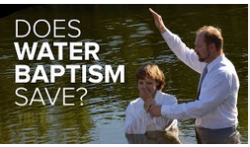
“Which sometime were disobedient, when once the longsuffering of God waited in the days of Noah, while the ark was a preparing, wherein few, that is, eight souls were saved by water. The like figure whereunto even baptism doth also now save us (not the putting away of the filth of the flesh, but the answer of a good conscience toward God,) by the resurrection of Jesus Christ” (1 Peter 3:20-21).
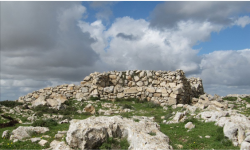
In Deuteronomy 27:2-8 we read of how Moses instructed Joshua to build an altar on Mt. Ebal after the Israelites had entered the Promised Land. There, the people were to sacrifice and give thanks to the Lord.
Problem: Are we saved from our sins by faith or by faith and baptism? Though the Bible says that baptism is a very important part of the Christian life, it is not necessary for salvation. The truth is that we are saved by faith alone in Christ alone. Let’s take a look at the scriptures used for both sides.

Every time I hear Andy Stanley talk about the Scriptures, I cringe. I get this sinking feeling of slow erosion—like watching a foundation quietly wash away under heavy rain beneath a house that still looks fine from the street.
Continue reading →
This is the only passage in the NT that states the salvific value of baptism (“baptism now saves you”). Does this mean that water baptism is necessary for salvation?

Ouch! You’ve just gotten a paper cut on your finger. What’s the first thing you do? If you’re like most people, you’ll probably put your finger in your mouth. If you think about it, you probably have no idea why you put your finger into your mouth. Actually, when a dog licks its wounds or when you put your paper cut-ravaged finger in your mouth, you are beginning medical treatment.
Peter writes that Jesus “made proclamation to the spirits now in prison, 20 who once were disobedient” (1 Pet. 3:19-20). What does this passage mean? Does it refer to Jesus going to hell in the three days between his death and resurrection?
Response:
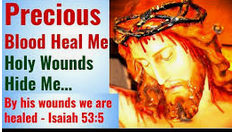
And between the throne and the four living creatures and among the elders I saw a lamb standing, as though it had been slain. (Rev 5:6)
Why should our exalted Lord appear in glory with His wounds? The wounds of Jesus are His glories, His jewels, His sacred ornaments. To the eye of the believer, Jesus is altogether lovely. We see Him as the lily of matchless purity, and as the rose crimsoned with His own blood. We behold the beauty of Christ in all His earthly pilgrimage, but there never was such matchless beauty as when He hung upon the cross. There we saw all His beauties in perfection, all His attributes developed, all His love drawn out, all His character expressed.
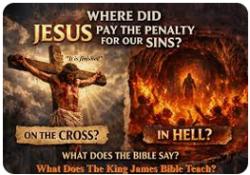
Did the Saviour Pay the Penalty for our Sins Prior to the Cross?
A common teaching of Reformed men is that the Lord’s death on the cross was not the only place where sin’s penalty was paid. They connect the payment of this penalty with our Lord’s sufferings apart from and prior to Calvary’s cross. They often point to the Lord’s sufferings in the Garden of Gethsemane as being a time when the Lord Jesus was suffering as the Divine Substitute for man’s sins.

As the world continues to get crazier, at least to our perception, Christians begin to wonder, “Is this the end?” We look to the Scripture for answers to wars and deception on the earth.
The Bible describes the Antichrist as a prominent End Times figure, a sign that things are coming to a close. As believers notice many powerful and evil leaders in different nations today, they seek more information about the Antichrist. Often, they try to match a modern figure with that evil figure.

Thousands of years prior to the establishment of the Lord’s Church, and long before Paul addressed the conduct of Christian slaves in the first century, various forms of slavery were commonplace. In fact, virtually every ancient civilization used slaves.1 Slavery was prevalent enough in Babylon in the 18th century B.C. to be mentioned numerous times in the Code of Hammurabi.2 The Egyptians enslaved hundreds of thousands of Israelites in the 16th century B.C. (Exodus 1; cf. Numbers 1:46). Historians estimate that, by the time Paul wrote his New Testament epistles in the first century A.D., five to eight million slaves resided within the Roman Empire,3 including 15-25% of the total population of Italy.4
Continue reading →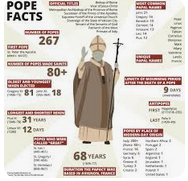
THE PAPACY AT THE TURN OF THE FIRST MILLENNIUM
The following is a description of the conditions existing at the turn of the first millennium AD: “In the tenth century the dominion of the Roman pope had exceedingly obscured, and taken possession of, nearly all the churches in Europe, so that everything had to be done according to his pleasure, both in spiritual and secular governments; hence, great darkness prevailed at this time, in which but very few learned, virtuous, and celebrated men lived. For fear of the great tyranny, one dared scarcely speak the least word of the adulteration of the doctrine, or the abuses in the false worship, and the increase of the abominable blasphemies; for, as soon as those who knew better, and feared God, uttered the least word of opposition, the pope instantly thundered, with hail and lightning as it were, excommunications from the Roman chair, so that everyone was terrified, since also the secular lords were bewitched and controlled by him” (Martyrs Mirror, 5th English edition, p. 248).
Continue reading →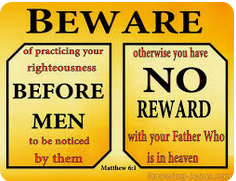
Matthew 6:1-4 says not to “practice your righteousness in front of others to be seen by them.” Matthew 23:5 condemns the Pharisees: “Everything they do is done for people to see: They make their phylacteries wide and the tassels on their garments long.” Matthew 5:16 and other verses such as 1 Peter 2:12 however say to let your works be seen by others to maybe convert them. Which is it? The answer is within the verses themself: works that are meant to be seen by others to make you look good (Matt. 6:1) aren’t real works, but ones that are really because of your obedience to God are good to be seen by others to glorify God not you. This is why Matt. 6:1 says, “Be careful not to practice your righteousness in front of others to be seen by them.” The warning is for the motivation, not the result of being seen. There is always a clear difference between doing things just for publicity, however minor it may be, and things that are done for the good they are meant to do. And this is the difference between the Pharisees in Matthew 23:5 and the people who are exhorted to practice good in front of people so that they may bring them to Christ (1 Peter 2:12, Matt. 5:16).

How old did the earth look five years after the creation? Geologists tell us that it takes hundreds of thousands of years to wear down new rock into sand and soil and for the sea to cut a beach. If this were true, one would not expect to see beaches or soil on an earth that was only five years old. Or would we?