Problem: He chose to live in the wicked city of Sodom (Genesis 13:12-13). He offered his two virgin daughters to an angry mob of homosexuals (Genesis 19:5-8). He later became drunk and impregnated his daughters, albeit unknowingly (Genesis 19:30-36). Anyone vaguely familiar with Old Testament history likely knows of Lot and his troubles. For this reason, some find it troubling that Lot is called “righteous” in the New Testament. Peter, in fact, used the term “righteous” three times to describe the patriarch: “God…delivered righteous Lot, who was oppressed by the filthy conduct of the wicked (for that righteous man, dwelling among them, tormented his righteous soul from day to day by seeing and hearing their lawless deeds” (2 Peter 2:7-8, emp. added). Why did Peter repeatedly call Lot “righteous” when many see a different picture of Lot in Genesis? Was Lot really righteous? Does the Bible contradict itself?
petra1000
Until An Answer Comes
He who has prepared us for this very thing is God, who has given us the Spirit as a guarantee. So we are always of good courage. We know that while we are at home in the body we are away from the Lord, for we walk by faith, not by sight. Yes, we are of good courage, and we would rather be away from the body and at home with the Lord. (2 Corinthians 5:5-8 ESV)
Whether your life lasts for several more decades or ends in fifteen seconds, you are waiting. And while you are waiting, you have an attitude. Hopefully it’s a mindset focused on God.
2 Pet 2:7-8 – A Lot of Righteousness
Problem: How could Lot be called righteous in 2 Peter 2:7–8 when he did so many bad things as recorded in Genesis 19?
In Genesis 13:12 we read that Lot, after departing from Abram (later called Abraham), dwelt in the cities of the plain near Sodom. By the time of Genesis 14:12, Lot had been living in Sodom for some time and was carried away captive but rescued by Abraham. The wicked reputation of the town of Sodom was obviously known to Lot (Genesis 13:13), yet he chose to stay there in spite of this knowledge.
A New Body
“Dear friends, we are already God’s children, but he has not yet shown us what we will be like when Christ appears. But we do know that we will be like him, for we will see him as he really is.” (1 John 3:2 nlt)
2 Pet 2:1 – For Whom Did Christ Die?
“But there were false prophets also among the people, even as there shall be false teachers among you, who privily shall bring in damnable heresies, even denying the Lord that BOUGHT them, and bring upon themselves swift destruction.” (2 Peter 2:1)
God’s Thoughts
How precious to me are your thoughts, O God! (Psalms 139:17)
2 Peter 2:1 – Do false teachers lose their salvation?
Problem: Peter writes that these false teachers will undergo judgment, because they denied “the Master who bought them” (2 Pet. 2:1). How can it be possible that these men are “bought” by Christ, and yet, they are judged as the rest of the passage teaches (v.9, 17, 20-21)?
Here’s What No Cash Actually Means
A cashless society means no cash. Zero. It doesn’t mean mostly cashless and you can still use a ‘wee bit of cash here & there’. Cashless means fully digital, fully traceable, fully controlled. I think those who support a cashless society aren’t fully aware of what they are asking for. A cashless society means:
2 Peter 1:20 – Does 2 Peter 1:20 mean we can’t interpret scripture on our own?
Roman Catholics routinely appeal to 2 Peter 1:20 for justification of their position that Protestants are not allowed to properly interpret Scripture because they don’t have authority. Their approach is interesting because they are appealing to Scripture to justify why we Protestants can’t do the same thing; namely, appeal to Scripture for our position. Interesting.
The Dangers Of SSA
This morning, I found out that Sam Allberry has been disqualified from ministry by the elders of the church where he was serving due to what they called an “inappropriate relationship”. In addition to serving at this church, Allberry was a frequent contributor to The Gospel Coalition (TGC) and Desiring God (John Piper’s site). To my surprise, I found out today that Allberry was also a frequent chapel speaker at Cedarville University. Allberry is an advocate for the idea that same sex attraction (SSA) is a result of the fall of man and is therefore simply a temptation, not a sin. He taught, even on the Cedarville campus, that one could live with SSA as a faithful Christian, as long as he did not go into lustful thoughts and actions. He himself claimed that this was his testimony.
Continue reading →1 Pet 5:14 – Should we greet each other with a holy kiss?
Paul commands Christians to greet each other with a holy kiss? Is this morally binding for today?
Are Mormons Christian? Do Mormons and Christians believe the same things?
While the Mormon Church—Church of Jesus Christ of Latter-day Saints, or LDS Church—claims Christian roots, its beliefs significantly deviate from biblical Christianity. Mormons deny that Jesus is fully God, teach that God was once a man, and believe salvation is achieved through works, rather than grace, making it clear that Mormons are definitely not Christian.
1 Pet 4:6 – Do the unsaved dead get a second chance to hear the gospel?
Peter writes, “The gospel has for this purpose been preached even to those who are dead, that though they are judged in the flesh as men, they may live in the spirit according to the will of God” (1 Pet. 4:6). Does this mean that people get to hear the gospel after they die?
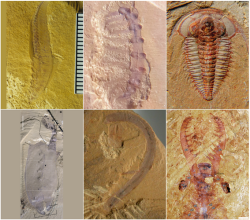
Worms with Kneecaps
Recent fossil discoveries in China are being greeted by evolutionists as among the most spectacular of the century. The fossils, say evolutionists, represent some of the earliest multicelled creatures. Evolutionists are publicizing these fossils as evidence for evolution. It’s not difficult, however, to see how these fossils support creation rather than evolution.
1 Pet 3:21 – The Bible’s Teaching on Baptism: Contradictory or Complementary?
According to numerous skeptics, the Bible is inconsistent regarding whether or not water baptism is necessary (e.g., Drange, 1996; Morgan, 2003; cf. Wells, 2001). In Dennis McKinsey’s book, Biblical Errancy (2000), he lists several verses that teach the need for one to be baptized in order to be saved (Matthew 28:19; Mark 16:16; Acts 2:38; 1 Peter 3:21; etc.), but then he lists four verses (John 4:2; 1 Corinthians 1:14,16,17) which allegedly teach that baptism “is not a necessity” (p. 61). According to these men, Jesus and Paul were confused regarding the purpose of baptism.