Continue reading →
02
May
2025
John 3:5 – Does this passage refer to water baptism?
Continue reading →

Problem: Critics note that Jesus chased out the money changers with “a scourge of cords.” Why was he so angry here?
Continue reading →
Problem: The Gospel of John states that Jesus cleansed the temple early in His ministry, but the other Gospels place the temple-cleansing near the end of His ministry. Who is right?
Continue reading →
Problem: One of the most popular alleged Bible discrepancies pertaining to chronology—and one that skeptics are fond of citing in any discussion on the inerrancy of Scripture—is whether or not Jesus cleansed the temple early in His ministry, or near the end. According to Matthew, Mark, and Luke, Jesus cleansed the temple during the final week leading up to His death on the cross (Matthew 21:12-13; Mark 11:15-17; Luke 19:45-46). John, however, places his record of the temple cleansing in chapter 2 of his gospel account, between Jesus’ first miracle (2:1-12) and His conversation with Nicodemus (3:1-21). How should John’s gospel account be understood in light of the other three writers placing the event near the end of Jesus’ ministry? Skeptics question, “Did Jesus enter the temple and drive out the money changers early in His ministry, or near the end?”
Continue reading →
Problem: Imagine your mother asking you to do something for a neighbor, and you responding to her by saying, “Woman, what does that have to do with me?” If your mother is anything like mine, she probably would have given you “the look” (among other things) as she pondered how her son could be so rude. Responding to a mother’s (or any woman’s) request in twenty-first-century America with the refrain, “Woman…,” sounds impolite and offensive. Furthermore, a Christian, who is commanded to “honor” his “father and mother” (Ephesians 6:2), would be out of line in most situations when using such an expression while talking directly to his mother.
Continue reading →
here is no contradiction here at all between Matthew 4:18-19 and John 1:42-43. The chronology of events becomes evident when viewing the grid below. In John 1:35ff, John the Baptist was with his disciples.
Continue reading →
Problem: Current American culture is saturated with reports of significant recruiting violations occurring across the collegiate sports world. A new scandal appears to break as soon as the litany of investigations into another scandal comes to an end. Throughout such an investigative process, institutions are monitored extensively in order to discover if any illegal or inconsistent activity occurred. Virtually every time such an investigation is conducted, the program in question is found to have violated protocol. From time to time, however, investigations prove that slander and false accusations are all that truly exists.
Continue reading →
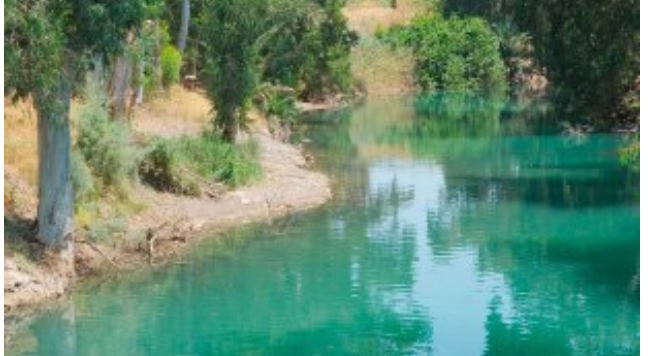
Problem: Early on in Jesus’ ministry, John the Baptizer made one of the most beautiful and powerful declarations in all of Holy Writ about Jesus of Nazareth: “Behold! The Lamb of God who takes away the sin of the world!” (John 1:29). Following this glorious, redemptive statement, however, John makes two claims that have been problematic for some. He said about Jesus:
“I did not know Him [previously—EL] but that He should be revealed to Israel, therefore I came baptizing with water…. I saw the Spirit descending from heaven like a dove, and He remained upon Him. I did not know Him, but He who sent me to baptize with water said to me, ‘Upon whom you see the Spirit descending, and remaining on Him, this is He who baptizes with the Holy Spirit’” (1:31-33, emp. added).
Problem: Some have tried to claim a biblical contradiction between John 1:29–36 and the parallel passages of Matthew 11:2–3 and Luke 7:19–20. “Did John the Baptist know Jesus was the Messiah?”
Seeing this is a potential issue, it’s important to ask: “Did John the Baptist know Jesus was the Messiah?”
Problem: Mark’s Gospel claims Jesus was “immediately” driven into the wilderness after His baptism, but John seems to disagree. We will take a lot at this.
Immediately the Spirit drove Him into the wilderness. And He was there in the wilderness forty days, tempted by Satan, and was with the wild beasts; and the angels ministered to Him. (Mark 1:12–13)
However, in his Gospel, John seems to say that Jesus was in Cana three days after His baptism. Is there a contradiction?
Continue reading →
Problem: We do not know exactly when John the Baptist finally figured out that Jesus was the Messiah. Even after John was arrested and was in prison, he still wasn’t sure. One possible explanation could be that though John initially seemed to realize Jesus was the Messiah
Continue reading →
Problem: Most people who have done much study from the synoptic gospels are aware that following the baptism of Jesus, He “then” (Matthew 4:1; Luke 4:1) “immediately” (Mark 1:12) was sent out by the Spirit into the wilderness where He fasted for forty days while being tempted by the devil. Skeptics likewise are “well informed” of this story. In fact, some skeptics presume to know about this time in Jesus’ life so well, they have argued that the apostle John contradicted the synoptic writers (see “Inerrancy;” “Contradictions;” Wells, 2001). Allegedly, John placed Jesus at the wedding in Cana of Galilee just three days following His baptism (John 1:19-2:1), whereas Mark indicated that Jesus went into the desert for forty days “immediately” following His baptism. Is this a real chronological contradiction, as some suppose?
Continue reading →
Problem: Some verses in the gospels seem to say that John the Baptist