Problem: Thousands of years prior to the establishment of the Lord’s Church, and long before Paul addressed the conduct of Christian slaves in the first century, various forms of slavery were commonplace. In fact, virtually every ancient civilization used slaves.1 Slavery was prevalent enough in Babylon in the 18th century B.C. to be mentioned numerous times in the Code of Hammurabi.2 The Egyptians enslaved hundreds of thousands of Israelites in the 16th century B.C. (Exodus 1; cf. Numbers 1:46). Historians estimate that, by the time Paul wrote his New Testament epistles in the first century A.D., five to eight million slaves resided within the Roman Empire,3 including 15-25% of the total population of Italy.4
Month: January 2026
A Sorrowful Love: Not All of Our Family Will Enter the Kingdom of Heaven?
The Apostle Paul’s words in Romans 9 reveal one of the most emotionally charged moments in all of Scripture. Speaking from the depths of his heart, Paul confesses his grief over those closest to him: his fellow Israelites, his family, and his friends, who have rejected Christ. “I speak the truth in Christ; I am not lying, my conscience confirms it through the Holy Spirit; I have great sorrow and unceasing anguish in my heart. For I could wish that I myself were cursed and cut off from Christ for the sake of my people, those of my own race” (Romans 9:1-3, NIV).
Paul’s anguish was not theoretical. It was deeply personal. His sorrow came from the realization that many of his own people, those who shared his heritage, his traditions, and his memories, had chosen to remain outside of the salvation found in Jesus Christ. Although he does not explicitly declare that they are beyond redemption, his grief reflects a profound awareness of their separation from God’s plan of salvation. This passage is a moving expression of what every Christian eventually faces: the pain of knowing that those we love may never accept the gift of eternal life through Christ.
Continue reading →Eph 5:22 – Is Ephesians 5:22 A Reason to Reject the God of the Bible?
According to The Telegraph of London, one of the “top 10 worst Bible passages” is Ephesians 5:22, in which Paul taught, “Wives, submit to your husbands as to the Lord.”1 In his book God: The Most Unpleasant Character in All Fiction, Dan Baker titled chapter nine simply “Misogynistic.” Barker alleged: “Women are second-class. Because of Eve’s insubordination, she was forced to become dependent on man. From then on, all women are inferior, so the bible says.”2
Faith, Trust and Hope
Our lives are defined by the experience of invisible, limited, spiritual Truth. Our experience of the Truth is incomplete in terms of what impact is made on our natural mind, namely our temporal, physical limitations for how to know God. Our experience of the Truth is incomplete in terms of what impact is made on our natural heart, namely our ability to give and receive Love.
Continue reading →Eph 5:18 – How can a person be filled with the Spirit?
All those who BELIEVE on the Lord Jesus Christ RECEIVE the Holy Spirit of God (John 7:37-39). This blessed and divine Person dwells within every born again believer (1 Corinthians 6:19; Romans 8:9). The living God wants to powerfully WORK in the submissive believer to produce CHRIST-LIKENESS (see Philippians 2:13)
THE PAPACY: A Long History Of Blood Shed
The Atrocities Committed In Defense Of Unbiblical Traditions
Introduction
From the pages of Scripture to the annals of history, God repeatedly warns that religious power divorced from biblical truth becomes one of the most dangerous forces on earth.
Christ founded His church on humility, service, truth, and love (Matthew 20:25–28; John 18:36). Yet history records the rise of a religious system that departed from these principles, merging ecclesiastical authority with political power, enforcing doctrine by coercion, and shedding the blood of those who refused submission.
Eph 4:8-10 – The Location of Hades
This difficult passage has been understood by Bible interpreters in various ways. The best
solution is to compare Scripture with Scripture, which I have endeavored to do in this
study. May the Lord help us to understand these verses. Peter once wrote about Paul’s
writings: “Our beloved brother Paul according to the wisdom given unto him hath written
unto you, as also in all his epistles, speaking in them of these things, in which are some
things hard to be understood” (2 Peter 3:15-16). These three verses might be included
among things which Paul wrote which are hard to be understood. May the Lord give us
understanding in all things (2 Tim. 2:7)!
Mideast invasion
Ezekiel declared that the most massive Mideast invasion in human history would occur in the latter years. These are the latter years, and Israel and Russia are clearly identified in the Hebrew prophet’s ancient predictions.
Eph 2:8-9 – What is the “gift of God” in this verse? Is faith the gift of God? (Part 2)
For by grace are ye saved through faith; and that not of yourselves: it is the gift of God: Not of works, lest any man should boast. (Ephesians 2:8-9 KJV)
Eternal Security and Problem Passages
Eternal security is the Bible confidence that every born again believer has perfect, complete, eternal salvation in Jesus Christ. As soon as a sinner receives Christ, he possesses full, unending salvation. To have Christ is to have a secure position before God (1 Jn. 5:10-13). Though the Bible does not use the term “security” to describe the believer’s relationship in Christ, it leaves no doubt that the child of God is eternally safe in Christ. Eternal security refers only to those who are born again through repentance and faith in Jesus Christ. It does not refer to hypocrites or to those who are merely dabbling in the things of Christ. Those who permanently fall away have never been born again.
Ep 2:8-9 – What is the “gift of God” in this verse? Is faith the gift of God? (Part 1)
For by grace are ye saved through faith; and that not of yourselves: it is the gift of God: Not of works, lest any man should boast. (Ephesians 2:8-9 KJV)
Your Body’s 100,000 Sentries
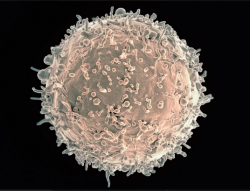
Despite the fact that most microorganisms are necessary and good, throughout our lifetimes each of us encounters tens of thousands of different infectious bacteria, viruses, fungi and parasites.
Continue reading →Eph 2:8-9 – Taking Possession of What God Gives: A Case Study in Salvation
Relatively few within Christendom would deny that eternal salvation is a free gift from God. The New Testament is replete with statements stressing this point. The most oft’-quoted verse in all of Scripture teaches this very fact: “God so loved the world that He gave His only begotten Son…” (John 3:16). God did not offer the gift of eternal life to the world because of some great accomplishment on the part of mankind. Rather, as Paul wrote to the church at Rome, “God demonstrates His own love toward us, in that while we were still sinners, Christ died for us” (5:8). Later, in that same chapter in Romans, Paul spoke of the “free gift” of spiritual life through Christ (5:15-21). He wrote to the church at Corinth, indicating that it is God “who gives us the victory through our Lord Jesus Christ” (1 Corinthians 15:57, emp. added). And earlier in this epistle, Paul expressed gratitude for the Corinthians and their salvation, saying, “I thank my God always concerning you for the grace of God which was given to you by Christ Jesus” (1:4, emp. added). Truly, God gives His grace away to anyone who will humbly and obediently accept it (James 4:6; 1 Peter 5:5; cf. Revelation 22:17). It is, as so many have noted, unmerited favor.
Continue reading →Preach the word
THE RAM AND THE LAMB
From Temporary Covering to Eternal Completion
Genesis 22:13 | Matthew 27:29 | Hebrews 10:10
Believe the Gospel of Grace — 1 Corinthians 15:1–4
Eph 2:8-9 – Is Faith a Gift from God?
Continue reading →“For by grace you have been saved through faith. And this is not your own doing; it is the gift of God, not a result of works, so that no one may boast” (Ephesians 2:8-9, ESV).