If Jesus is God’s “only begotten Son,” then how can angels and Christians also be God’s sons?
It is clear from verses such as the following that one title for Jesus is “Son of God.”


If Jesus is God’s “only begotten Son,” then how can angels and Christians also be God’s sons?
It is clear from verses such as the following that one title for Jesus is “Son of God.”

This contrast is from Clarence Larkin

Problem: In Galatians 3:17 Paul takes the 430 years of Exodus 12:40-41 to refer to the period from the day God appears to Abraham and he leaves for/into Canaan to the day of the Exodus. This is the most logical interpretation because Genesis 15:13 says his descendants will be “sojourners in a foreign land” for 400 years; Abraham is 75 when he leaves Haran (Gen. 12:4), and Isaac is born to him when he’s 100 (Gen. 21:5). This leaves us with 405 years technically, which is why some older commentators supposed that the 400 years began when Ishmael teased a 5-year-old Isaac (Gen. 20:9 – Ishmael laughed, presumably at Isaac’s expense). This is neither possible nor necessary to prove – 405 years can easily be rounded to 400 to carry the same sense, much like other ages and numbers are.

Based on Romans 9:1-3
(By Rick McGrath )
The Apostle Paul’s words in Romans 9 reveal one of the most emotionally charged moments in all of Scripture. Speaking from the depths of his heart, Paul confesses his grief over those closest to him: his fellow Israelites, his family, and his friends, who have rejected Christ. “I speak the truth in Christ; I am not lying, my conscience confirms it through the Holy Spirit; I have great sorrow and unceasing anguish in my heart. For I could wish that I myself were cursed and cut off from Christ for the sake of my people, those of my own race” (Romans 9:1-3, NIV).
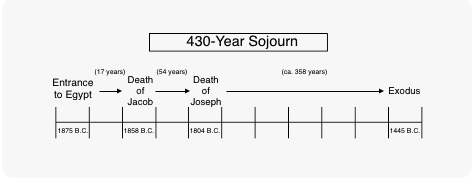
Problem: Were the Israelites in Egypt for only 215 years? If so, what about the passages that have 400 or 430 years?
Continue reading →
If you’ve spent any time paying attention to the agonizing death throes of liberal Anglicanism, it should come as no surprise that its latest brilliant idea to staunch the bleeding involves not just ignoring Scripture, but intentionally thumbing their noses at it.
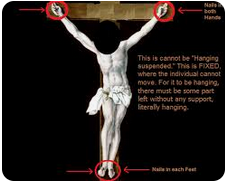
Problem: The word xylon denoted both a tree and a cross figuratively (being made out of wood). This is clearly the case here with Paul, who in Galatians 3:13 refers to the cross as a xylon, yet in other places obviously acknowledges a belief that Jesus was crucified on a cross (stauros) and not a physical tree (e.g. Galatians 5:11, 6:12, Philippians 2:8, 3:18, etc).

Problem: Jesus proclaimed that “whoever says, ‘You fool!’ shall be in danger of hell fire
” (Matthew 5:22). However, there are instances throughout Scripture where people are called fools. For example, David wrote, “The fool has said in his heart, ‘There is no God’
” (Psalm 14:1). Paul told the Galatians they were foolish (Galatians 3:1). Jesus even said the Pharisees and scribes were fools in Matthew 23:17.
So does the Lord’s claim in Matthew 5:22 contradict these other passages where people are actually called fool?

One thing that is important to understand about the Bible is that it contains very human language. Of course, this set of books was inspired by God, so what it teaches is also divine. But nevertheless, it was written by human beings who used their own language to express things.
Continue reading →

Did you ever wonder why you don’t rust? Before you laugh, remember—iron is not only a major part of your blood, it is used to attract the oxygen that is carried by your blood to the rest of your body. And you know what happens when oxygen meets the iron in your car or a tool that is left outside overnight—rust! So, why don’t we rust?
Continue reading →
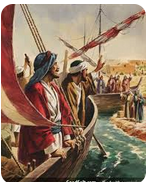
Problem: Three times in the book of Acts,the Bible student is informed that after Saul’s conversion to Christ in Damascus, he departed for Jerusalem. According to Acts chapter 9, Saul (also called Paul) “increased all the more in strength” following his baptism into Christ, and “confounded the Jews who dwelt in Damascus” (vs. 22). Then, when “many days were past…the disciples took him by night and let him down through the wall in a large basket” for fear of the Jews (vss. 23,25). Immediately following these verses, the text reads: “And when Saul had come to Jerusalem, he tried to join the disciples; but they were all afraid of him, and did not believe that he was a disciple” (vs. 26, emp. added). Add to these verses Paul’s respective statements to the Jerusalem mob (Acts 22:17) and to King Agrippa (Acts 26:20) regarding his journey from Damascus to Jerusalem, and Bible students get the impression that shortly after Paul‘s conversion in Damascus, he journeyed to Jerusalem. The problem with this reasoning is that Paul later wrote to the churches of Galatia, and indicated that he “did not immediately…go up to Jerusalem” following his calling to Christ (Galatians 1:16). Rather, he went to Arabia, back to Damascus, and then after three years he went up to Jerusalem (1:17-18). [NOTE: “Arabia” generally is taken as a reference to the vast peninsula which bears that name. Its northwestern boundaries reached almost to Damascus—Pfeiffer, 1979, p. 203.] Concerned Bible students want to know how these passages are harmonized? Did Paul go straight to Jerusalem shortly after his conversion, or three years later?
Continue reading →

1. We must not trust self. “That we should not trust in ourselves but in God” (2 Cor 1:9)
“Thus saith the Lord; Cursed be the man that trusteth in man, and maketh flesh his arm, and whose heart departeth from the Lord. For he shall be like the heath in the desert, and shall not see when good cometh; but shall inhabit the parched places in the wilderness, in a salt land and not inhabited. Blessed is the man that trusteth in the Lord, and whose hope the Lord is.” (Jer 17:5-7). Self will always disappoints you and lets you down. We are not sufficient of ourselves (2 Cor 3:).
Continue reading →

Problem: God told Jeremiah: “Before I formed you in the womb I knew you; before you were born I sanctified you; and ordained you a prophet to the nations.” But if God knew Jeremiah before he was formed in the womb, then He must have preexisted as a soul before he was incarnated into a body, which is what reincarnation teaches.

There are some wonderful designs that help make the giraffe possible. The giraffe has a strong heart to pump blood all the way up to its head and strong arteries to withstand the high blood pressure needed to carry the blood to its head. We have also talked about the giraffe’s so-called “wonder net,” which is a network of blood vessels that helps to stabilize the blood pressure in the giraffe’s head even when it raises and lowers its head.
Continue reading →
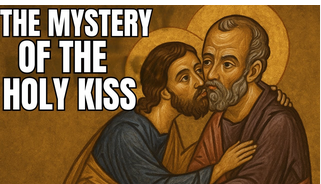
Problem: Paul commands Christians to greet each other with a holy kiss? Is this morally binding for today?