Month: July 2019

The Pre-Flood World, Part 1

Author: Ian Taylor

1. The name Genesis that we apply to the first book of the Bible has been adopted from the Greek word GENESIS meaning “beginnings.” The Jews call this book BERESHITH which is the first Hebrew word of this book and means “In beginning.” Genesis 1:1, In the beginning God created the heavens and the earth. There is a logical order here: Beginning (time), heavens (space) and earth (matter). The Big Bang Theory has reversed this order. Note that “the heavens” is plural. This correctly follows from the Hebrew SHAMYIM; the ending of this word indicates a duality while we know from 2 Corinthians 12:2 that there are at least three heavens since this verse speaks of the “third heaven..” From our perspective, the first heaven is “where the birds fly”(Genesis 1:20), a fitting description of the biosphere. The second heaven is outer space or sidereal heaven, Isaiah 13:10 says, “the stars of heaven.” In the context of Paul’s “third heaven” this is clearly a spiritual dimension and the abode of God. Recent discoveries have shown that the galxies of the universe form seven internesting spheres. Although there is no Scripture for this pattern it strongly indicates design and negates what would be expected from a Big Bang.

Continue reading →

Posted by petra1000 in Creation

10 Things You Should Know about Jesus Christ (Part 1)

It actually sounds a bit silly, even irreverent, to speak of only ten things we should know about Jesus. There are thousands of things to know about him, perhaps millions. Indeed, when we arrive in the new heaven and new earth we will discover that there is an infinity of truths about our Savior that it will be our joy to see, know, and savor. But for now, today, let’s consider the ten things said about him in Colossians 1:15-20. There Paul writes:

“He is the image of the invisible God, the firstborn of all creation. For by him all things were created, in heaven and on earth, visible and invisible, whether thrones or dominions or rulers or authorities—all things were created through him and for him. And he is before all things, and in him all things hold together. And he is the head of the body, the church. He is the beginning, the firstborn from the dead, that in everything he might be preeminent. For in him all the fullness of God was pleased to dwell, and through him to reconcile to himself all things, whether on earth or in heaven, making peace by the blood of his cross” (Col. 1:15-20).

Continue reading →
Posted by petra1000 in Jesus

Deuteronomy 18:15–18—Is this a prophecy about the prophet Mohammed?

Problem: God promised Moses here, “I will raise up for them [Israel] a Prophet like you from among their brethren, and will put My words in His mouth, and He shall speak to them all that I command Him” (v. 18). Muslims believe this prophecy is fulfilled in Mohammed, as the Koran claims when it refers to “The unlettered Prophet [Mohammed], Whom they find mentioned in their own [scriptures], in the Law and the Gospels” (Surah 7:157).

Continue reading →

Posted by petra1000 in Bible Difficulty

Deuteronomy 18:10–22—How can false prophets be distinguished from true prophets?

Problem: The Bible contains many prophecies which it calls upon us to believe because they come from God. However, the Bible also acknowledges the existence of false prophets (Matt. 7:15). Indeed, many religions and cults claim to have prophets. Hence, the Bible exhorts believers to “test” those who claim to be prophets (1 John 4:1–3). But what is the difference between a false prophet and a true prophet of God?

Continue reading →

Posted by petra1000 in Bible Difficulty

Deuteronomy 15:4—How can this passage say there would be no poor among them when 15:11 says the poor will always be in the land?

Problem: According to Deuteronomy 15:4, God promises that there will not be any poor among the people. However, 15:11 clearly states, “For the poor will never cease from the land.” How can one passage say there would be no poor among the people while another says that the poor will never cease from the land?

Continue reading →

Posted by petra1000 in Bible Difficulty

Deuteronomy 14:26—How can this passage permit the use of strong drink when other passages condemn its consumption?

Problem: According to Deuteronomy 14:26, God permitted the purchase of wine or strong drink for conducting a feast before the Lord. However, Leviticus 10:8–9 forbids the use of strong drink by the priests, and passages like Proverbs 20:1, 23:29–35, and 31:4–5 seem to forbid the use of strong drink by all. How can this passage permit the use of strong drink when these other passages clearly condemn its use?

Continue reading →

Posted by petra1000 in Bible Difficulty

The Church Fathers: A Door to Rome

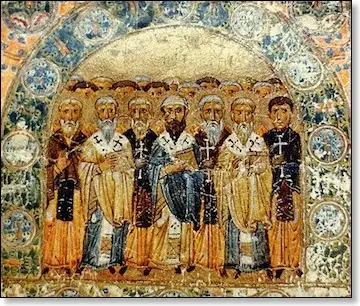
Many people have walked into the Roman Catholic Church through the broad door of the “church fathers,” and this is a loud warning today when there is a widespread attraction to the “church fathers” within evangelicalism.

The Catholic apologetic ministries use the “church fathers” to prove that Rome’s doctrines go back to the earliest centuries. In the book Born Fundamentalist, Born Again Catholic, David Currie continually uses the church fathers to support his position. He says, “The other group of authors whom Evangelicals should read … is the early Fathers of the Church” (p. 4).

The contemplative prayer movement is built on this same weak foundation. The late Robert Webber, a Wheaton College professor who was one of the chief proponents of this back to the “church fathers” movement, said:

“The early Fathers can bring us back to what is common and help us get behind our various traditions … Here is where our unity lies. … evangelicals need to go beyond talk about the unity of the church to experience it through an attitude of acceptance of the whole church and an entrance into dialogue with the Orthodox, Catholic, and other Protestant bodies” (Ancient-Future Faith, 1999, p. 89).

Continue reading →

Posted by petra1000