How long does it take to make a fossil? Most people think that it takes a long time and that’s partly because we have been repeatedly told that fossils are millions of years old.
17
Jul
2026
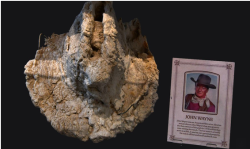

How long does it take to make a fossil? Most people think that it takes a long time and that’s partly because we have been repeatedly told that fossils are millions of years old.

In an effort to show the days of the creation week should not be interpreted as 24-hour days, several old-earth creationists have argued that the events of Day Six could not have fit within a single day. Skeptics and critics have used the same argument in their attempts to find contradictions in Scripture. The late old-earth creationist, Dr. Gleason Archer, summarized the problem this way:

And, behold, one came and said unto him, Good Master, what good thing shall I do, that I may have eternal life? (Matthew 19:16 KJV)
This verse doesn’t imply there is more than one God. Aside from the suggestion that this refers to the three persons of the Trinity: the Father, the Son, and the Holy Spirit, it is also possible to give the interpretation that this is a reflection of the conceptual image the Jews had of God. For them he was multi-faceted and did not have only one side to his character as did the other gods around them. This was why he was called Elohim, which is the plural for the singular El (God), and this may be an ancient remnant, or a particular place of expression, where God’s action/nature as non-singular was emphasized.

Today, we want to tell you more about the Cheetah. From a human standpoint, Daniel would have been a whole lot safer if he had been thrown into a den of cheetahs rather than a den of lions.
Continue reading →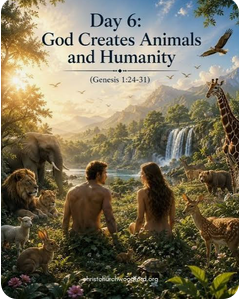
After reading the first two chapters of the Bible, some skeptics, in an attempt to disprove the Bible’s inerrancy, have accused the writer of Genesis of erring in regard to the record of events occurring on day six of creation. While Genesis 1:24-27 plainly indicates that man was created after the animals, critics claim that Genesis 2:18-19 teaches that man was created before animals. They strongly assert that such language by the author of Genesis proves that the Bible is not divinely inspired.
Continue reading →
The Gog and Magog of Ezekiel 38-39 refer to a great military alliance that will attack Israel from the north in the latter days.
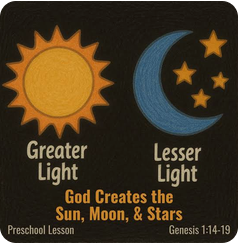
This objection is a favorite classic because whether you interpret the Creation account figuratively or literally, the issue is still there: how could God create light on Day 1, yet not make the stars, Sun, and Moon until Day 4 (Gen. 1:14-19)?
Continue reading →
Did you know that the phrase “according to its kind” appears ten times in the first chapter of Genesis? Not only is the fact that plants and animals reproduce according to their kind an important principle in the Bible, it is central to modern agriculture and husbandry. What’s more, there is no evidence in the fossil record that any creature ever existed that was in the process of changing from one kind into another. While many different kinds of plants and animals have become extinct, modern forms are found in the most ancient rocks.
At first glance, this seems like an easy question. Just as children have been singing for generations, it was on day four when God made “the Sun, Moon, and stars galore.” Some, however, have alleged that the “sun, moon and stars were created ‘in the beginning’ (Gen. 1:1)” (Thurman, 2006, p. 3), rather than on day four of Creation. Presumably,
These are marks of a New Testament church. They are major things that we see in Scripture itself. They are the characteristics God’s people should aim to build today, rejecting human tradition that is contrary to Scripture.
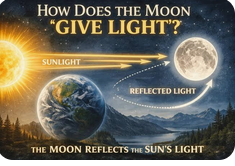
Continue reading →Genesis 1:15
“Let them [sun and moon] be for lights in the expanse of the heavens to give [emit] light on the earth.”
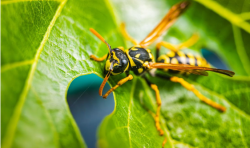
When it comes to wasps, you can just forget everything you learned about sexual reproduction in biology 101. There are male and female wasps. But that has very little to do with wasp reproduction.
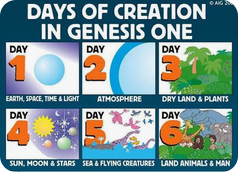
Genesis places the existence of seed bearing plants on Day 3 of creation, and land animals on Day 6. However, modern science tells us that seed bearing plants didn’t come into existence until 370 million years ago—long after land animals (380 mya). In fact, plants cannot exist without these other animals, which pollinate them and help them survive.

Some frogs are regular little drug factories. Their skins produce a wide range of powerful alkaloids, a large family of chemicals usually produced by plants. Familiar alkaloids include quinine, caffeine and morphine. Different alkaloids have different effects, usually on the nervous system.
Continue reading →