Therefore, confess your sins to one another and pray for one another, that you may be healed.
James 5:16 ESV
07
Sep
2026


Therefore, confess your sins to one another and pray for one another, that you may be healed.
James 5:16 ESV

Genesis 3 states that Eve ate the fruit first, but Romans 5 states that Adam caused sin to enter the world.
The “Problem”
The Genesis account of the Fall indicates that Eve ate the fruit first. This has led many people throughout history and even in our modern times to believe that she was the person responsible for original sin. You have likely heard the old canard, “We wouldn’t be in this mess [meaning the general sinfulness of our fallen world] if it weren’t for a woman.” But is that an accurate statement? Is Eve to blame for original sin?

How many are my iniquities and my sins? (Job 13:23)

While most Orthodox Jewish and Christian scholars have held the position that Sodom and Gomorrah were destroyed because of their rampant homosexual behavior (namely, sodomy), there are others who believe that those cities were destroyed because of their pride.
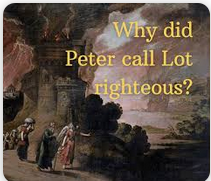
Problem: How could Lot be called righteous in 2 Peter 2:7–8 when he did so many bad things as recorded in Genesis 19?
In Genesis 13:12 we read that Lot, after departing from Abram (later called Abraham), dwelt in the cities of the plain near Sodom. By the time of Genesis 14:12, Lot had been living in Sodom for some time and was carried away captive but rescued by Abraham. The wicked reputation of the town of Sodom was obviously known to Lot (Genesis 13:13), yet he chose to stay there in spite of this knowledge.

Problem: The Bible clearly states that God cannot be tempted by evil, so why do other passages speak of God being tempted?

Leviticus 4:20–35 seem to teach that animal sacrifices can take away sins, while Hebrews 10:4–11 reveal they did not. Ron Dudek explains.
Problem: The book of Leviticus discusses many of the sacrifices performed by the Levitical priests. In some places, it seems to claim that a particular offering could remove sins.
And he shall do with the bull as he did with the bull as a sin offering; thus he shall do with it. So the priest shall make atonement for them, and it shall be forgiven them. (Leviticus 4:20)
Yet the book of Hebrews explicitly states that animal blood could not take away sins.
For it is not possible that the blood of bulls and goats could take away sins. (Hebrews 10:4)

Problem: Can man be held accountable for his sinful actions, and yet have Christ act as a substitution for his sins?
Genesis 9:5–6
Surely for your lifeblood I will demand a reckoning; from the hand of every beast I will require it, and from the hand of man. From the hand of every man’s brother I will require the life of man. Whoever sheds man’s blood, by man his blood shall be shed; for in the image of God He made man.

A World Shaped by Manipulated Reality
Look closely. What do you see? In the picture above, there are two versions of the same photo. One is genuine, the other has been modified. The photo on the right, released by MSNBC in the wake of Alex Pretti’s death has been photoshopped. Notice the tanned skin tone, brighter and more visible smile, darker eyebrows aligned with the top of his glasses, less elongated face, wider jawline, and added muscle definition. Clearly, there is a difference between these two images, but why would any news agency do this? Because you are in a propaganda war, and they want you to see the specific version of reality that they want you to see. The question that you should be asking is, what motive lies behind this contrived version of reality? What might be gained from using deceptive tactics like this?

If the leprous disease has covered all his body, he shall pronounce him clean of the disease.
(Leviticus 13:13)

Problem: Paul affirms in this text that Christ “has abolished death and brought life and immortality to light through the Gospel.” But death is not abolished, since “death spread to all men” (Rom. 5:12), and “it is appointed for men to die once” (Heb. 9:27).

Problem: Does God Condone Polygamy?
And he had seven hundred wives, princesses, and three hundred concubines; and his wives turned away his heart. (1 Kings 11:3)
A bishop then must be blameless, the husband of one wife, temperate, sober–minded, of good behavior, hospitable, able to teach . . . (1 Timothy 3:2)

If you have been a Christian for any length of time, you will probably have heard the saying, ‘God hates the sin but loves the sinner’. You might even have said these words yourself.
Continue reading →
This is a hard article for me to write, mainly because I’m afraid people will think that my opinions would have to be prejudiced by the fact that I am involved in (what has come to be known as) “contemporary Christian music.” As you might guess, the title of this article is no new question to me. Since I myself have been somewhat “guilty” of using the medium of rock, I have heard just about every opinion about it – and have received no limit of warning, exhortation, and outright rebuke from many a well-meaning soul. Since I take my negative mail very seriously – always reading each negative and corrective letter as a possible word or warning from God – I have had to listen closely to each argument – praying and thinking the whole thing through with eternal values in mind.
Continue reading →
Problem: Bear one another’s burdens, and so fulfill the law of Christ. (Galatians 6:2)
For each one will have to bear his own load. (Galatians 6:5)