Ask children who are even vaguely familiar with the biblical account of the Flood how many animals of each kind Noah took into the ark, and you likely will hear, “Two!” Most Bible students are familiar with the instructions recorded in Genesis 6:19 that God gave to Noah: “And of every living thing of all flesh you shall bring two of every sort into the ark, to keep them alive with you; they shall be male and female” (Genesis 6:19, emp. added; cf. 7:15). It seems that fewer people, however, are aware that God also instructed Noah, saying, “You shall take with you seven each of every clean animal, a male and his female; two each of animals that are unclean, a male and his female; also seven each of birds of the air, male and female, to keep the species alive on the face of all the earth” (Genesis 7:2-3, emp. added). According to Bible critics, these verses are contradictory. “Are clean beasts to enter by 2’s or by 7’s?” asked skeptic Dennis McKinsey (1983, p. 1).
Noah
Genesis 7:2 – Clean and Unclean Animals Before the Law of Moses?
One particular allegation that skeptics have made for many years concerning the biblical account of Noah and the Flood is that “[c]lean and unclean animals were not delineated until the eleventh chapter of Leviticus…. There were no…clean/unclean animals in Noah’s time” (McKinsey, 1983, p. 1). Early America’s most outspoken critic of the Bible, Thomas Paine, remarked in a letter to the editor of a paper known as The Prospect, saying:
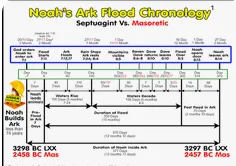
Genesis 7 – When did Noah enter the ark?
The apparent problem: In reading Genesis 7 it may appear that the Lord told Noah to enter the ark seven days before the flood began (verses 1-4), but verse 13 seems to indicate that Noah and his family entered the ark on the very day the the flood began.
Genesis 6:19 – How can there be ‘pairs’ of every animal but ‘sevens’ of the clean animals?
Gen 6:19 And of every living thing of all flesh, two of every sort shalt thou bring into the ark, to keep them alive with thee; they shall be male and female.
Gen 7:2 Of every clean beast thou shalt take to thee by sevens, the male and his female: and of beasts that are not clean by two, the male and his female.
Genesis 6:19 – How many pairs of animals were brought on the Ark?
The verse is taken to contradict Genesis 7:2 which says 7 of every clean kind. But the verse probably refers to the overall act of bringing a pair, or in absolute terms, at least a pair of every living thing (there wouldn’t be that many clean animals anyway). The point of the verse is to describe that a male and a female will be brought, saving the species, and not as to exactly how many pairs will be brought. Therefore, Genesis 7:2 is more specific in a certain area. This is supported by the fact that Genesis 7:2 says 7 pairs, male and its female, which is probably the author’s two by two in Genesis 7:9,15.
Genesis 6:19 – How Many Animals of Each Kind did Noah Take into the Ark?
Ask children who are even vaguely familiar with the biblical account of the Flood how many animals of each kind Noah took into the ark, and you likely will hear, “Two!” Most Bible students are familiar with the instructions recorded in Genesis 6:19 that God gave to Noah: “And of every living thing of all flesh you shall bring two of every sort into the ark, to keep them alive with you; they shall be male and female” (Genesis 6:19, emp. added; cf. 7:15). It seems that fewer people, however, are aware that God also instructed Noah, saying, “You shall take with you seven each of every clean animal, a male and his female; two each of animals that are unclean, a male and his female; also seven each of birds of the air, male and female, to keep the species alive on the face of all the earth” (Genesis 7:2-3, emp. added). According to Bible critics, these verses are contradictory. “Are clean beasts to enter by 2’s or by 7’s?” asked skeptic Dennis McKinsey (1983, p. 1).
Genesis 6:19 – How many pairs of animals were brought on the Ark?
And of every living thing of all flesh, two of every sort shalt thou bring into the ark, to keep them alive with thee; they shall be male and female. (Genesis 6:19 KJV)
Genesis 6:3 – Noah, the Flood, and 120 Years
“I am confused about some of the numbers found in Genesis 5-7. What exactly does the 120 years refer to in Genesis 6:3? I’ve heard some say that it refers to the limit of one’s lifespan on Earth, but that can’t be true because people lived longer than 120 years after the Flood. I also don’t understand how, as some have concluded, it could refer to there only being 120 years left before God flooded the Earth. That seems impossible since Noah was 500+ years old when he learned about the Flood (Genesis 5:32-6:13), and the Flood occurred when he was 600 (Genesis 7:6). It seems that either the 120 years does not refer to the time just before the Flood or the “120 years” should have been “100 years” (otherwise the Flood would have come in the 620th year of Noah and not the 600th year). Can you help explain this conundrum?”
The Time Sequence of the Flood
First the rain fell for 40 days (during this time the waters reached their great depth). See Genesis 7:4.