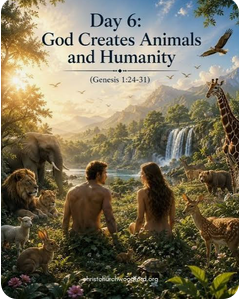
After reading the first two chapters of the Bible, some skeptics, in an attempt to disprove the Bible’s inerrancy, have accused the writer of Genesis of erring in regard to the record of events occurring on day six of creation. While Genesis 1:24-27 plainly indicates that man was created after the animals, critics claim that Genesis 2:18-19 teaches that man was created before animals. They strongly assert that such language by the author of Genesis proves that the Bible is not divinely inspired.
First
Genesis 1:24-27 – Did God Create Animals or Man First?
After reading the first two chapters of the Bible, some skeptics, in an attempt to disprove the Bible’s inerrancy, have accused the writer of Genesis of erring in regard to the record of events occurring on day six of creation. While Genesis 1:24-27 plainly indicates that man was created after the animals, critics claim that Genesis 2:18-19 teaches that man was created before animals. They strongly assert that such language by the author of Genesis proves that the Bible is not divinely inspired.
Continue reading →Genesis 1:9-11 – Were Plants or Humans Created First?
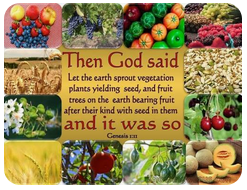
Most knowledgeable Christians read this question and immediately recall what Genesis 1 teaches: plants were created on day three (vss. 9-11) and humans on day six (vss. 24-31). Skeptics, however, have long criticized Genesis 1 and 2 as being contradictory. According to Bible critic Dennis McKinsey, “God made the fruit trees on the third day and created man three days later” in Genesis 1, but in Genesis 2 “God made man before the fruit trees” (1984, 22:1, emp. added). McKinsey’s criticism centers on Genesis 2:8-9a: “The Lord God planted a garden eastward in Eden, and there He put the man whom He had formed. And out of the ground the Lord God made every tree grow that is pleasant to the sight and good for food.” Allegedly, these verses contradict the chronology of Genesis 1:9-11,24-31.
Revelation 1:7 – Christ—the Firstfruits
In 1 Corinthians 15, Paul wrote at length concerning the resurrection of the dead, because some of the Christians in Corinth taught “that there is no resurrection of the dead” (vs. 12). As one of his proofs for the Christian’s eventual resurrection, Paul pointed to the fact of the resurrection of Christ, and showed that the two stand or fall together, saying, “if the dead do not rise, then Christ is not risen. And if Christ is not risen, your faith is futile; you are still in your sins” (vss. 16-17)! After hypothetically arguing from the absurd in an attempt to get the Corinthian Christians to see that their stance on the final resurrection completely undermined Christianity, Paul proceeded to demonstrate that Christ had risen, and thus made the resurrection of the dead inevitable. It is in this section of scripture that some find a difficulty. Beginning with verse 20, Paul wrote:
The First Five Years of Creation
How old did the earth look five years after the creation? Geologists tell us that it takes hundreds of thousands of years to wear down new rock into sand and soil and for the sea to cut a beach. If this were true, one would not expect to see beaches or soil on an earth that was only five years old. Or would we?
Return To Your First Love
You have abandoned the love you had at first. (Revelation 2:4)
We will always remember that best and brightest of hours when we first saw the Lord, lost our burden, received the gift of grace, rejoiced in full salvation, and went on our way in peace. It was springtime in the soul; the winter was past; the mutterings of Sinai’s thunders were hushed; the flashings of its lightnings were no more perceived; God was beheld as reconciled; the law threatened no vengeance, and justice demanded no punishment.
The First Will Be Last
“So Jesus said to them, “Assuredly I say to you, that in the regeneration, when the Son of Man sits on the throne of His glory, you who have followed Me will also sit on twelve thrones, judging the twelve tribes of Israel. And everyone who has left houses or brothers or sisters or father or mother or wife or children or lands, for My name’s sake, shall receive a hundredfold, and inherit eternal life. But many who are first will be last, and the last first.” (Matthew 19:28-30)