And Enoch walked with God: and he was not; for God took him. (Genesis 5:24 KJV)
12
Oct
2026


And Enoch walked with God: and he was not; for God took him. (Genesis 5:24 KJV)

The “Problem”
Did Enoch die as Hebrews 11:13 seems to imply or was he taken as stated in Genesis 5:24 and Hebrews 11:5?

In the Garden of Eden, the Lord delivered a single, solemn prohibition to man. God commanded Adam saying, “Of every tree of the garden you may freely eat; but of the tree of the knowledge of good and evil you shall not eat, for in the day that you eat of it you shall surely die” (Genesis 2:16-17, emp. added). The tree of the knowledge of good and evil that stood in the midst of the Garden was off limits to Adam and Eve. God prophesied that disobedience on their part would bring death “in the day” it was eaten. However, the Genesis text does not reveal an instantaneous physical death on the part of the first sinners. Adam lived a total of 930 years (Genesis 5:5), and the text indicates that most of those occurred after the transgression in the Garden of Eden (see Thompson, 2002, pp. 44-46). Is such consistent with Genesis 2:16-17? Was God mistaken in saying, “in the day that you eat of it [the fruit—EL] you shall surely die”? Why is it that Adam did not drop dead the very day he ate the forbidden fruit?
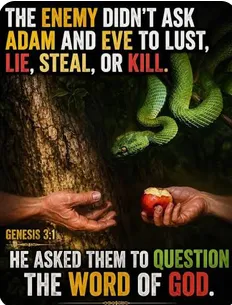
Although God says that Adam (and Eve) would die if he ate from the tree, he lives 930 years.

Gen 2:17 But of the tree of the knowledge of good and evil, thou shalt not eat of it: for in the day that thou eatest thereof thou shalt surely die.
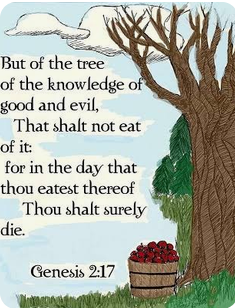
Although God says that Adam (and Eve) would die if he ate from the tree, he lives 930 years. But this presupposes a literalist interpretation of die. The meaning of “…for in the day that thou eatest thereof thou shalt surely die.” (Gen. 2:17b, KJV), can certainly be understood as an expression that Adam and Eve’s immortality would be lost. The author of Genesis certainly couldn’t have wanted to say that Adam and Eve would die the very same day they ate of the forbidden fruit and so this remains as a Semitic expression of the kind we can see elsewhere in Ancient Near Eastern Literature (for example Xerxes and other Persian emperors’ inscriptions). Even if one thinks the JEDP theory here has a redactor or a different author insert verse 2:17 (and 3:3-4), that redactor certainly couldn’t have wanted to say Adam and Eve would die that very same day and not change the rest of Genesis (and explain the origin of humanity how?). It is similar to when Jesus told the repentant thief on the cross, “…today you will be with me in paradise.” (Luke 23:43).

In the Garden of Eden, the Lord delivered a single, solemn prohibition to man. God commanded Adam saying, “Of every tree of the garden you may freely eat; but of the tree of the knowledge of good and evil you shall not eat, for in the day that you eat of it you shall surely die” (Genesis 2:16-17, emp. added). The tree of the knowledge of good and evil that stood in the midst of the Garden was off limits to Adam and Eve. God prophesied that disobedience on their part would bring death “in the day” it was eaten. However, the Genesis text does not reveal an instantaneous physical death on the part of the first sinners. Adam lived a total of 930 years (Genesis 5:5), and the text indicates that most of those occurred after the transgression in the Garden of Eden (see Thompson, 2002, pp. 44-46). Is such consistent with Genesis 2:16-17? Was God mistaken in saying, “in the day that you eat of it [the fruit—EL] you shall surely die”? Why is it that Adam did not drop dead the very day he ate the forbidden fruit?

In the Kyle Butt/Dan Barker debate, Dan Barker alleged that He “knows” the God of the Bible cannot exist because “there are mutually incompatible properties/characteristics of the God that’s in this book [the Bible—EL] that rule out the possibility of His existence” (2009). One of the supposed contradictions that Barker mentioned was that God claims invisibility, yet has been seen. (His assertion is found 10 minutes and 55 seconds into his first speech.) Since biblical passages such as Exodus 33:20-23, John 1:18, and 1 John 4:12 teach that God cannot be seen, while other scriptures indicate that man has seen God and spoken to him “face to face” (Exodus 33:11; Genesis 32:30), allegedly “the God of the Bible does not exist.”

“But there were false prophets also among the people, even as there shall be false teachers among you, who privily shall bring in damnable heresies, even denying the Lord that BOUGHT them, and bring upon themselves swift destruction.” (2 Peter 2:1)

Problem: This verse declares that Christ gave Himself a ransom for all. The term “all” must be defined by its context. In verses 1-2 we are exhorted to pray for all men. Why should we pray for all men? Because God our Saviour is concerned about all men: “God our Saviour who desires all men to be saved and to come to the knowledge of the truth” (verses 3-4). How did God prove that He really desires all men to be saved? He provided a Mediator between God and man and this Mediator gave Himself a ransom for all. In effect the Apostle is here saying, “Pray for all because God desires the salvation of all as evidenced by His death for all.”

1. We must not trust self. “That we should not trust in ourselves but in God” (2 Cor 1:9)
“Thus saith the Lord; Cursed be the man that trusteth in man, and maketh flesh his arm, and whose heart departeth from the Lord. For he shall be like the heath in the desert, and shall not see when good cometh; but shall inhabit the parched places in the wilderness, in a salt land and not inhabited. Blessed is the man that trusteth in the Lord, and whose hope the Lord is.” (Jer 17:5-7). Self will always disappoints you and lets you down. We are not sufficient of ourselves (2 Cor 3:).
Continue reading →

Problem: As ambassadors of Christ we are to go to all men with the word of reconciliation. How can we tell lost men and women to be reconciled to God if no such reconciliation has been provided? But if God has indeed reconciled the world unto Himself, then we can go to the world with a message of reconciliation. Christ’s act of suffering provides a righteous basis for God to welcome the rebel’s return. For those who are enemies of God and for all those who are enemies of God, we have a message of good news! We have a word of reconciliation! We have a message of hope because “He died for all” (2 Cor. 5:14-15). God is the Reconciler of all men (verse 19, “the world”), especially of them that believe (verse 20 where reconciliation is limited to those who respond in faith). Compare 1 Timothy 4:10.

Problem: What was the gospel message which Paul preached to lost men? The Apostle Paul very specifically sets forth the gospel that he preached in 1 Corinthians 15:1-4. In 1 Corinthians 15:3 we learn that the central part of the gospel message is that “Christ died for our sins according to the Scriptures.” In 1 Corinthians 15:1 Paul says that this is the very gospel which he preached to the Corinthians, and obviously when they first heard the gospel they were unsaved and unregenerate, and Paul did not know which ones in his audience were among the elect. He just knew that God had “much people” in this city (Acts 18:10). To these unsaved Corinthians, including some who would never be saved, Paul preached this gospel: “Christ died for OUR sins (yours and mine)!”