Consider my affliction and my trouble, and forgive all my sins. (Psalms 25:18)
Continue reading →
17
Apr
2026


Consider my affliction and my trouble, and forgive all my sins. (Psalms 25:18)
Continue reading →
The Example of Abraham
Both Paul and James turned to the life of Abraham to illustrate justification. Paul writes, “For if Abraham was justified by works, he has something to boast about, but not before God. For what does the scripture say? Abraham believed God, and it was reckoned to him as righteousness” (Rom 4:2-3). James seems to contradict Paul when he writes, “Was not our father Abraham justified by works when he offered his son Isaac on the altar?” (James 2:21) A careful analysis will help shed light on this apparent disagreement.

How long does it take to petrify wood? Scientists who believe in those millions and billions of years that evolutionists are always talking about have never tested the answer to this question. They simply assumed that it must take hundreds or thousands of years to petrify wood. It wasn’t until the 1970s that scientists bothered to explore this question.

James writes, “But one who looks intently at the perfect law, the law of liberty, and abides by it, not having become a forgetful hearer but an effectual doer, this man will be blessed in what he does” (Jas. 1:25). Does this mean that we are under law or not?
Response:

For this very night there stood before me an angel of the God to whom I belong. (Acts 27:23)
Continue reading →
In the February 12, 2009 Butt/Barker Debate on the existence of the God of the Bible, atheist Dan Barker spent nearly two-thirds of his opening 15-minute speech alleging that the Bible’s portrayal of God is contradictory. Barker alleged several discrepancies (most all of which we have answered elsewhere on our website), including that God cannot logically dwell in light and darkness. Twelve minutes and five seconds into his first speech, Dan Barker asserted:
Continue reading →
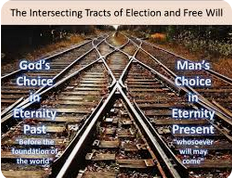
There is no question but that the “Doctrine of Election” is taught in the Scriptures, and that it applies not only to “service,” but to “salvation.” It is equally true that the “Doctrine of the Freedom of the Will” under certain conditions is also taught. We may not be able to reconcile the “Sovereign Will of God,” with the “Free-will of Man,” but that is no proof that they are not reconcilable. They are the corresponding halves of the Doctrine of Salvation, “Election” is the Godward side, and “Free-will” the manward side. The perversion of the “Doctrine of Election” leads to the “Doctrine of Inability” or Fatalism, which denies the freedom of man’s choice, and therefore his accountability or responsibility for his salvation. It was this Doctrine that the Revelation. Charles G. Finney thundered against during all his evangelistic ministry.
Continue reading →
Problem: In his February 12, 2009 debate with Kyle Butt, Dan Barker alleged that he “knows” the God of the Bible cannot exist because “there are mutually incompatible properties/characteristics of the God that’s in this book [the Bible—EL] that rule out the possibility of His existence.” Seven minutes and 54 seconds into his first speech, Barker cited James 1:13 and Genesis 22:1 as proof that the God of the Bible cannot exist. Since James 1:13 says: “Let no man say when he is tempted, I am tempted of God: for God cannot be tempted with evil, neither tempteth he any man” (KJV), and Genesis 22:1 affirms that “God did tempt Abraham” (KJV) to sacrifice his son, Barker asserted that God is like a married bachelor or a square circle—He cannot logically exist.

Hell is a major and fundamental doctrine of the Bible. Jesus preached a lot about hell, but it is a neglected doctrine today, and this is one of the reasons why the fear of God is not before men’s faces. Take “Christian America,” for example. Even in the age of skepticism, a large percentage of Americans are church goers, but America doesn’t fear God because the vast majority of its pulpits don’t preach the fear of God. Hell is not the sweet, positive type of religious message that Americans want to hear, because they have been nurtured on cotton candy theology rather than the pure Word of God. If you listen to funeral sermons, you would think that everyone is in heaven, and that is emphatically not the case, for Jesus said, “Enter ye in at the strait gate: for wide is the gate, and broad is the way, that leadeth to destruction, and many there be which go in thereat: Because strait is the gate, and narrow is the way, which leadeth unto life, and few there be that find it” (Matthew 7:13-14), and, “Verily, verily, I say unto thee, Except a man be born again, he cannot see the kingdom of God” (John 3:3), and, “I tell you, Nay: but, except ye repent, ye shall all likewise perish” (Luke 13:3).
According to Scripture, Jesus was Deity in the flesh (John 1:1-5,14; 20:28). He was not sired by man; He was not conceived naturally by woman (Isaiah 7:14; Matthew 1:23). Rather, Jesus came from heaven (John 3:13; 6:38), proved His “mighty God” Messiahship (Isaiah 9:6) through a variety of verified miracles (John 20:30-31; cf. Lyons and Butt, 2006), accepted worship (Matthew 14:33; John 9:38), and claimed a unity with God the Father that even His enemies understood was a profession of Deity (John 10:30,33). Some, however, question the Bible’s consistency of Jesus being God. The argument goes something like this (cf. Wells, 2010): The Bible declares that Satan tempted Jesus (Matthew 4:1), and that Jesus was “in all points tempted as we are” (Hebrews 4:15). Yet, the Bible also declares that “God cannot be tempted by evil” (James 1:13). Therefore, the Bible (allegedly) contradicts itself regarding the nature of Jesus. How could He be God, if God cannot be tempted?
Continue reading →


Problem: The Bible clearly states that God cannot be tempted by evil, so why do other passages speak of God being tempted?

How many different scents do you think your nose is able to smell? The answer is about 10,000. How does your nose tell the difference between a rose and a skunk? Until only recently, scientists really weren’t sure.
Problem: James writes, “Let endurance have its perfect result, so that you may be perfect and complete, lacking in nothing” (Jas. 1:4). Does this mean that Christians can reach a state of sinless perfection?

All we like sheep have gone astray; we have turned every one to his own way; and the Lord has laid on him the iniquity of us all. (Is 53:6)