Problem: In John 12:24, Jesus said concerning His approaching death, “Most assuredly, I say to you, unless a grain of wheat falls into the ground and dies, it remains alone; but if it dies, it produces much grain” (emp. added). The Law of Biogenesis says that in nature, life comes only from life of its own kind (Miller, 2012). Life cannot spontaneously generate or create itself. So, how could a grain which “dies,” subsequently produce living things? Does this phenomenon contradict the Law of Biogenesis? Did Jesus make a mistake? Was He ignorant of the scientific principle we call the Law of Biogenesis? Continue reading →
Problem: After the widow’s son of Zarephath died, Elijah prayed to God, “and the soul of the child came back to him, and he revived” (1 Kings 17:22). A few years later, the prophet Elisha raised the dead son of a Shunammite (2 Kings 4:32-35). Then, after Elisha’s death, a dead man, in the process of being buried in the tomb of Elisha, was restored to life after touching Elisha’s bones (2 Kings 13:20-21). When Jesus was on Earth, He raised the daughter of Jairus from the dead (Mark 5:21-24,35-43), as well as the widow of Nain’s son (Luke 7:11-16) and Lazarus, who had been buried for four days (John 11:1-45). After Jesus’ death and resurrection, Matthew recorded how “the graves were opened; and many bodies of the saints who had fallen asleep were raised; and coming out of the graves after His resurrection, they went into the holy city and appeared to many” (27:52-53). Then later, during the early years of the church, Peter raised Tabitha from the dead (Acts 9:36-43), while Paul raised the young man Eutychus, who had died after falling out of a three-story window (Acts 20:7-12). All of these people died, and later rose to live again. Although some of the individuals arose very shortly after death, Lazarus and (most likely) the saints who were raised after the resurrection of Jesus, were entombed longer than was Jesus. In view of all of these resurrections, some have asked, “What is so important about Jesus’ resurrection?” If others in the past have died to live again, what makes His resurrection so special? Why is the resurrection of Jesus more significant than any other? Continue reading →
Problem: “For as by one man’s disobedience many were made sinners,
so by the obedience of one shall many be made righteous”
(Romans 5:19). Continue reading →
Problem: Paul writes, “Just as through one man sin entered into the world, and death through sin, and so death spread to all men, because all sinned” (Rom. 5:12). What does Paul mean by this statement? Does he mean that all people sin—just as Adam sinned? Or does he mean that we were held responsible for what Adam did in the fall? Continue reading →
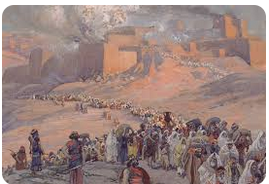
Both of these passages from Isaiah and Ezekiel take place during the people from their land. Because the people were disobedient to the Law, God gave them over to the Babylonians in 586 BC. Here Paul is making a connection with this earlier event: When the Jews lost their land because of disobedience to God, this caused the Pagan nations to blaspheme God. How could God be with the Jews if they were being punished in this way? In the same way, how could God be with the Jews (in Paul’s day) if they were disobeying him (again) in such severe ways?
Problem: In 1 Corinthians 15, Paul wrote at length concerning the resurrection of the dead, because some of the Christians in Corinth taught “that there is no resurrection of the dead” (vs. 12). As one of his proofs for the Christian’s eventual resurrection, Paul pointed to the fact of the resurrection of Christ, and showed that the two stand or fall together, saying, “if the dead do not rise, then Christ is not risen. And if Christ is not risen, your faith is futile; you are still in your sins” (vss. 16-17)! After hypothetically arguing from the absurd in an attempt to get the Corinthian Christians to see that their stance on the final resurrection completely undermined Christianity, Paul proceeded to demonstrate that Christ had risen, and thus made the resurrection of the dead inevitable. It is in this section of scripture that some find a difficulty. Beginning with verse 20, Paul wrote: Continue reading →
Problem: “And now why tarriest thou? arise, and be baptized, and wash away thy sins, calling on the name of the Lord” (Acts 22:16).
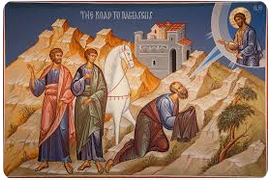
In this passage Paul is recounting his conversion experience. According to Acts chapter 9, Saul of Tarsus (Paul) met the risen Christ on the road to Damascus. It was at this point that Saul was blinded. It was not until three days later that God sent Ananias to Saul, he received his sight and he was baptized in water. The verse given above is what Ananias told Saul to do three days after he had seen the Lord on the road to Damascus. Continue reading →
Problem: Acts 20:28—“Take heed therefore to yourselves, and to all the flock, wherein the Holy Spirit has
set you as overseers, to shepherd the assembly of God, which he has purchased [or ‘acquired for
Himself’] with his own blood.” Continue reading →
How important is repentance? Is repentance essential for salvation?There are those today who teach that repentance is not essential for salvation. They teach that repentance is not a requirement for salvation. They would say that faith and faith alone is required for salvation, but not repentance.One group which teaches this goes by the name of free grace. This view is represented by the Grace Evangelical Society. Some of their leading teachers would be the late Zane Hodges, Bob Wilkin, Jody Dillow and many others. Continue reading →
Problem: Are we saved from our sins by faith or by faith and baptism? Though the Bible says that baptism is a very important part of the Christian life, it is not necessary for salvation. The truth is that we are saved by faith alone in Christ alone. Let’s take a look at the scriptures used for both sides.
Solution:
Saved by faith
Rom. 4:5, “But to the one who does not work, but believes in Him who justifies the ungodly, his faith is credited as righteousness.”
Rom. 5:1, “Therefore having been justified by faith, we have peace with God through our Lord Jesus Christ.”
Eph. 2:8-9, “For by grace you have been saved through faith; and that not of yourselves, it is the gift of God; 9 not as a result of works, that no one should boast.”
Saved by baptism
Acts 2:38, “And Peter said to them, “Repent, and let each of you be baptized in the name of Jesus Christ for the forgiveness of your sins; and you shall receive the gift of the Holy Spirit.”
Acts 22:16, “And now why do you delay? Arise, and be baptized, and wash away your sins, calling on His name.”
1 Pet. 3:21, “And corresponding to that, baptism now saves you – not the removal of dirt from the flesh, but an appeal to God for a good conscience – through the resurrection of Jesus Christ.”
There is much debate within Christianity as to whether or not baptism is necessary for salvation. I cannot here exhaustively examine this issue, but I can affirm that baptism is not necessary for salvation. The scriptures teach that justification is by faith (Rom. 5:1). It also teaches that baptism is a necessary result of becoming a disciple of Christ (Matt. 28:18-19). Even 1 Peter 3:21 above says that the baptism mentioned is not one dealing with water, but an appeal to God.
God works covenantally. A covenant is a pact or agreement between two or more parties. The New Testament and Old Testaments are New and Old Covenants. The word “testament” comes from the Latin testamentum which means covenant. So, the Bible is a covenant document. If you don’t understand covenant you cannot understand, in totality, the issue of baptism because baptism is a covenant sign. Covenant signs do not save. The things they represent are what save.
Regeneration occurs by faith (Rom. 5:1). Afterward, baptism is administered as an outward representation of an inward reality. For example, it represents the reality of the inward washing of Christ’s blood upon the soul. That is why it is used in different ways. It is said to represent the death of the person (Rom. 6:3-5), the union of that person with Christ (Gal. 3:27), the cleansing of that person’s sins (Acts 22:16), the identification with the one “baptized into” as when the Israelites were baptized into Moses (1 Cor. 10:2), and being united in one church (1 Cor. 12:13). Also, baptism is one of the signs and seals of the Covenant of Grace that was instituted by Jesus.
Baptism is not a requirement of salvation, but it is so closely tied to it that some people erringly think it is the actual thing that saves. It isn’t. Faith in Christ is what saves.
Problem: As Saul journeyed toward Damascus in hopes of persecuting more followers of Jesus Christ, “suddenly a light shone around him from heaven” (Acts 9:3). Saul “fell to the ground, and heard a voice saying to him, ‘Saul, Saul, why are you persecuting Me?’ And he said, ‘Who are You, Lord?’ Then the Lord said, ‘I am Jesus whom you are persecuting’” (9:4-5). Interestingly, Luke, the penmen of Acts, records how those who journeyed with Saul, “stood speechless, hearing a voice, but seeing no one” (9:7, emp. added). Critics of the Bible’s divine inspiration allege, however, that Saul contradicted Luke when he recounted these events in Jerusalem years later. As Saul (whose name by that time had been changed to Paul) gave his defense before the Jewish mob, he mentioned that “those who were with me indeed saw the light…but they did not hear the voice of Him who spoke to me” (22:9, emp. added). Skeptics contend that Acts 9:7 and Acts 22:9 are contradictory. After all, how could Saul’s companions hear but not hear, and see but not see? Continue reading →
Problem: Near the close of his words of exhortation to the Ephesus elders recorded by Luke in Acts 20, the apostle Paul reminded them of something Jesus once said: “It is more blessed to give than to receive” (Acts 20:35). The problem that many have with Paul’s quotation of Jesus, however, is that it nowhere appears in the gospel accounts, or anywhere else in Scripture outside of Acts 20. According to one Bible critic, Continue reading →