Problem: According to Deuteronomy 14:26, God permitted the purchase of wine or strong drink for conducting a feast before the Lord. However, Leviticus 10:8–9 forbids the use of strong drink by the priests, and passages like Proverbs 20:1, 23:29–35, and 31:4–5 seem to forbid the use of strong drink by all. How can this passage permit the use of strong drink when these other passages clearly condemn its use?
petra1000
Deuteronomy 14:22ff—Doesn’t this contradict Moses’ other command not to redeem animals with money?
Problem: In Numbers 18:17, the law commands, “The firstborn of a cow, the firstborn of a sheep, or the firstborn of a goat you shall not redeem; they are holy.” However, in Deuteronomy 14:25 they were instructed to “exchange it for money” if they desired. This is in direct conflict with the other instructions.
The Church Fathers: A Door to Rome
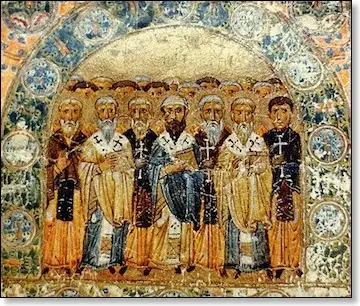
Many people have walked into the Roman Catholic Church through the broad door of the “church fathers,” and this is a loud warning today when there is a widespread attraction to the “church fathers” within evangelicalism.
The Catholic apologetic ministries use the “church fathers” to prove that Rome’s doctrines go back to the earliest centuries. In the book Born Fundamentalist, Born Again Catholic, David Currie continually uses the church fathers to support his position. He says, “The other group of authors whom Evangelicals should read … is the early Fathers of the Church” (p. 4).
The contemplative prayer movement is built on this same weak foundation. The late Robert Webber, a Wheaton College professor who was one of the chief proponents of this back to the “church fathers” movement, said:
“The early Fathers can bring us back to what is common and help us get behind our various traditions … Here is where our unity lies. … evangelicals need to go beyond talk about the unity of the church to experience it through an attitude of acceptance of the whole church and an entrance into dialogue with the Orthodox, Catholic, and other Protestant bodies” (Ancient-Future Faith, 1999, p. 89).
Deuteronomy 12:24—Was the blood poured out as water or covered with dust?
Problem: According to this verse, the priest was to take the blood of the sacrifice and “pour it on the earth like water.” But, earlier in Leviticus 17:13 they were instructed to “cover it with dust.” How can these be reconciled?
Deuteronomy 11:25—Isn’t this a false prophecy?
Problem: Moses told the children of Israel that “No man shall be able to stand against you; the Lord your God will put the dread of you and the fear of you upon all the land where you tread, just as He has said to you.” But this seems clearly false both in the short view and in the long run. Even under Joshua, Israel lost some battles (Josh 7:4). And in the long run, they were overrun by the Assyrians (2 Kings 16:9) and the Babylonians (2 Kings 25:22).
Deuteronomy 10:8–9—Are priests distinguished from Levites or not?
Deuteronomy 10:6—Did Aaron die at Moserah, or did he die at the top of Mount Hor?
Problem: According to Deuteronomy 10:6, Aaron died in Moserah and was buried there. However, according to Numbers 20:27–28 and 33:38, Aaron died at the top of Mount Hor and was buried there. Where did Aaron die, in Moserah or on the top of Mount Hor?
Forcing Matter To Stick
The following is from Creation Moments (https://creationmoments.com), May 16, 2019:
“Why doesn’t an atom fly apart? It really ought to do so. School children are taught that atoms basically contain three types of particles–protons, neutrons and electrons.
Deuteronomy 10:1–3—When was the Ark made?
Deuteronomy 9:3—Were the Canaanites destroyed quickly or slowly?
Problem: This verse claims the Canaanites were destroyed “quickly” (maher), but an earlier passages (Deut. 7:22) said it would not be quickly, but “little by little.”
Deuteronomy 8:2—Didn’t God know what Israel would do?
Problem: This passage says that God led Israel into the wilderness in order “to know” what they would do. But if God knows everything already (Ps. 139:7–10; Jer. 17:10), then why did He need to do this to know whether they would obey Him?
Deuteronomy 5:15—Was the Sabbath instituted because of God’s rest from creation or His redemption of Israel from Egypt?
Problem: When Moses first gave the Law to Israel, the reason stated for the Sabbath observance was because “in six days the Lord made the heavens and the earth … and rested the seventh day. Therefore, the Lord blessed the Sabbath day and hallowed it” (Ex. 20:11). But, when Moses repeated the Law to the new generation entering the Promised Land, the reason given was that “God brought you out from there [Egypt] by a mighty hand and by an outstretched arm; therefore the Lord your God commanded you to keep the Sabbath” (Deut. 5:15). Why two different reasons?
Do Christians and Muslims Worship the Same God?
by Casey McFall
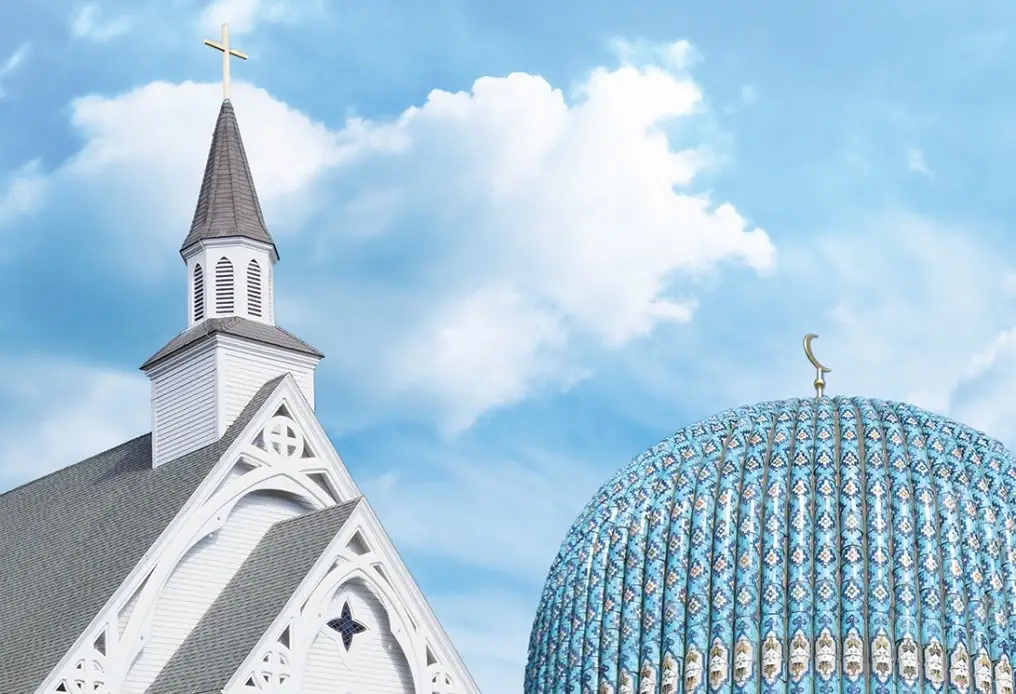
The short answer is NO—Muslims and Christians do not worship the same God. In fact, even Jews do not worship the same God (see below). A part of the reason why so many people believe that Muslims and Christians worship the same God is because Muslims claim to worship a monotheistic god who was the “god” of Abraham and shares many characteristics with the true God. In fact, Muslims are actually taught that they worship the same God as Christians. Surah 29:46 in the Qur’an states: “Do not dispute other than in a good way with the people of Scripture, except for those of them who do evil; and say: ‘We have faith in that which has been revealed to us and revealed to you. Our God and your God are One, and to Him we submit [ourselves].’”
Deuteronomy 5:6–21—How could Moses alter the wording of the Ten Commandments from that which God spoke to him?
Problem: In Deuteronomy 5:6–21 Moses repeats the Ten Commandments to Israel. In reviewing the covenant which God made with Israel, Moses reviews the commandments which God gave to Israel at Sinai. However, Moses’ wording of the commandments in this passage is not exactly the same as the wording of God in Exodus 20:2–17. How could Moses alter the wording of the Ten Commandments from wording which God gave to him?
Deuteronomy 4:10–15—Was the law given at Horeb or at Mt. Sinai?
Problem: Exodus 19:11 affirms that Moses received the Law at “Mt. Sinai” (cf. v. 18). But here in Deuteronomy 4:10 it claims that Moses got it “in Horeb.” Which was it?