THE SABBATH WAS FIRST GIVEN TO ISRAEL AND IS GOD’S SIGN TO ISRAEL
Seventh-day Adventists teach that men kept the sabbath from the days of Adam, but this is contrary to the Bible’s own record.

THE SABBATH WAS FIRST GIVEN TO ISRAEL AND IS GOD’S SIGN TO ISRAEL
Seventh-day Adventists teach that men kept the sabbath from the days of Adam, but this is contrary to the Bible’s own record.

Problem: Leviticus 17:11 affirmed that God gave blood sacrifices “to make atonement” for our souls. But Hebrews seems to contradict that, insisting that the Aaronic priest “stands ministering daily and offering repeatedly the same sacrifices, which can never take away sins” (10:11).
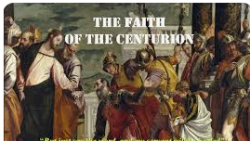
Luke 7 is the account of the centurion who had a servant that was very ill. The centurion asked Jewish elders to approach Jesus, to request that He come to heal his servant boy.
2 Now a centurion had a bond servant who was held in honor and highly valued by him, who was sick and at the point of death. 3 And when the centurion heard of Jesus, he sent some Jewish elders to Him, requesting Him to come and make his bond servant well. – Luke 7:2-3
Leviticus 4:20–35 seem to teach that animal sacrifices can take away sins, while Hebrews 10:4–11 reveal they did not. Ron Dudek explains.
Problem: The book of Leviticus discusses many of the sacrifices performed by the Levitical priests. In some places, it seems to claim that a particular offering could remove sins.
And he shall do with the bull as he did with the bull as a sin offering; thus he shall do with it. So the priest shall make atonement for them, and it shall be forgiven them. (Leviticus 4:20)
Yet the book of Hebrews explicitly states that animal blood could not take away sins.
For it is not possible that the blood of bulls and goats could take away sins. (Hebrews 10:4)

I remember reading in grade school that the human appendix is a useless organ. My textbook said that scientists thought that the appendix was once used to help digest the tree bark that our supposed ape-like ancestors ate. Does the human body have “extra” parts? Do we have organs that we no longer use because we have evolved away from needing them?

Problem: Can man be held accountable for his sinful actions, and yet have Christ act as a substitution for his sins?
Genesis 9:5–6
Surely for your lifeblood I will demand a reckoning; from the hand of every beast I will require it, and from the hand of man. From the hand of every man’s brother I will require the life of man. Whoever sheds man’s blood, by man his blood shall be shed; for in the image of God He made man.

“My Song Is Love Unknown” is unfamiliar to most Baptists, but it is a powerful hymn that exalts Christ’s great love as seen in His sacrificial atonement on Calvary. It is a hymn about a love that is unknown in the sense of being beyond knowing.

Problem: 1 Kings 8:9 explicitly states that only the stone tablets of Moses’ Law were inside the Ark. Hebrews 9:4, however, says that Aaron’s rod and a golden jar of manna was in there as well. However, between the time of Moses and the time of Solomon, which 1 Kings 8 talks about, there were about 450 years. Many have noted that the Ark was moved quite a bit and the objects could have easily been taken out and left at the Temple or some other place. Very possibly, the golden jar would have been used as one of the numerous golden articles in the Temple (Exodus 25).

“But let us, who are of the day, be sober, putting on the breastplate of faith and love; and for a helmet, the hope of salvation” (1 Thessalonians 5:8).
In light of the imminent Rapture and the approaching day of the Lord (1 Th. 4:13 – 5:3), we are to put on “the breastplate of faith and love; and for a helmet, the hope of salvation” (1 Th. 5:8).
Problem: Following Israel’s exodus from Egypt, God instructed them to make a small wooden ark (box) overlaid with gold. The ark was 2.5 cubits long, 1.5 cubits wide, and 1.5 cubits high (or about 3.75 x 2.25 x 2.25 feet) and was called the “Ark of the Testimony” or the “Ark of the Covenant” because it contained the tablets of stone whereon the Ten Commandments were written (Exodus 25:16). According to 1 Kings 8:9, “Nothing was in the ark except the two tablets of stone” (emp. added; cf. 2 Chronicles 5:10). The writer of Hebrews, however, indicated that the ark contained “the golden pot that had the manna, Aaron’s rod that budded, and the tablets of the covenant” (9:4). How can both of these passages be correct?

Modern evangelical churches have spent the last twenty years trying very hard to prove something. Not that the gospel is powerful. Not that the Word of God is sufficient.
Continue reading →
Problem: In Exodus 40:26, the Bible states that the “golden altar” was in the holy place of the tabernacle, in front of the veil. On the other hand, the book of Hebrews (9:3-4) indicates that the altar of incense was in the most holy place. How can these passages be harmonized?

What is warm-blooded, sits on its eggs like a hen, but flies much better than a hen, and has six legs? It’s the bumblebee.

Problem: “Without father, without mother, without descent, having neither beginning of days, nor end of life; but made like unto the Son of God; abideth a priest continually” (Hebrews 7:3)
There are some who identify Melchizedek as the pre-incarnate Christ. That is, they believe that Christ Himself appeared to Abraham in Genesis 14. This seems to be based primarily on a misunderstanding of the verse cited above (Heb. 7:3).

I will guard my ways. (Psalms 39:1)