Problem: The Chronicler declares that Nebuchadnezzar “came up against him [Jehoiakim], and bound him in bronze fetters to carry him off to Babylon.” But elsewhere “Jehoiakim rested with his fathers” (2 Kings 24:6) and was “buried with the burial of a donkey, dragged and cast out beyond the gates of Jerusalem” (Jer. 22:19; cf. 36:30).
Month: November 2018
2 Chronicles 34:3–5—If Josiah demolished idolatry, then why does it say Manasseh did it earlier?
Problem: Here we are informed that Josiah destroyed the altars and idols, but earlier (in 2 Chron. 33:15) Manasseh had destroyed them.
Solution: No human king can root out the depraved human desire for idolatry. Therefore, Josiah had to redo the same work that his predecessor had done. A good human king can destroy idols, but not the love of idols. And, as long as this love exists, idolatry will live to rear its ugly head again and again.
2 Chronicles 33:10–17—Why is the repentance of Manasseh recorded here, but no mention is made of it in 2 Kings?
Problem: According to this text, upon his return, Manasseh repented of his earlier sin and reinstituted the worship of the Lord in Judah. However, the record of the career of Manasseh as found in 2 Kings 21 does not mention this glorious repentance. Why?
2 Chronicles 28:24—Did Ahaz encourage or oppose worship in the Jerusalem temple?
Problem: In 2 Kings 16:15, Ahaz encouraged the worship of the Lord in the temple. But, in 2 Chronicles 28 he is said to have “shut up the doors of the house of the Lord, and made for himself altars in every corner of Jerusalem” (v. 24). Continue reading →
The Attributes of God by A.W. Pink – The Holiness of God
“Who shall not fear thee, O Lord, and glorify Thy name? for thou only art holy” (Rev. 15:4). He only is independently, infinitely, immutably holy. In Scripture, He is frequently styled “The Holy One.” He is so because the sum of all moral excellency is found in Him. He is absolute purity, unsullied even by the shadow of sin. “God is light, and in him is no darkness at all” (1 John 1:5). Holiness is the very excellency of the divine nature; the great God is “glorious in holiness” (Ex. 15:11). Therefore we read, “Thou art of purer eyes than to behold evil, and canst not look on iniquity” (Hab. 1:13).
Attitude
2 Chronicles 22:8—Were Ahaziah’s brothers slain or were they his brother’s sons?
Problem: Here we are told that it was king Ahaziah’s brother’s “sons” who were killed. But 2 Kings 10:13–14 says it was Ahaziah’s “brothers” that were slain.
2 Chronicles 22:1—Were Jehoram’s sons taken captive or were they killed?
Problem: According to 2 Chronicles 21:16–17, Jehoram’s sons were only taken captive by the Philistines and the Arabians. By contrast, this passage says they “killed all the older sons.”
2 Chronicles 21:12—How could Elijah have sent a letter long after his departure into heaven?
Problem: When Jehoram became king in Judah, “he made high places in the mountains of Judah, and caused the inhabitants of Jerusalem to commit harlotry, and led Judah astray” (2 Chron. 21:11). In 2 Chronicles 21:12, we find that, in response to Jehoram’s sin, Elijah sent a letter to Jehoram. However, if Elijah was translated prior to the reign of Jehoram the son of Jehoshaphat, then how could he have sent a letter to Jehoram?
2 Chronicles 16:1—How can this verse say Baasha king of Israel built Ramah in the thirty-sixth year of the reign of Asa?
Problem: Asa began his reign in about 911 b.c. The thirty-sixth year of his reign would have been about 876 or 875 b.c. However, Baasha began his reign in 909 and reigned until 886 b.c. when Elah his son became king (1 Kings 16:8). How could 2 Chronicles 16:1 say Baasha built Ramah in the thirty-sixth year of Asa, 11 years after Baasha’s death?\
2 Chronicles 14:9—How can this verse make reference to Zerah the Ethiopian, when there are no historical records of such a person?
Problem: When Asa was king in Judah, he was confronted by Zerah the Ethiopian who marshalled an army of 1 million men. However, there are no historical records of such a person. Is this an error?
2 Chronicles 13:4–22—Was Abijah a wicked or a righteous king?
Problem: According to 1 Kings 15:3, Abijah was a wicked king who “walked in all the sins of his father.” However, here in 2 Chronicles he is represented as giving a speech against idolatry and in defense of God’s appointed priests and temple in Jerusalem.
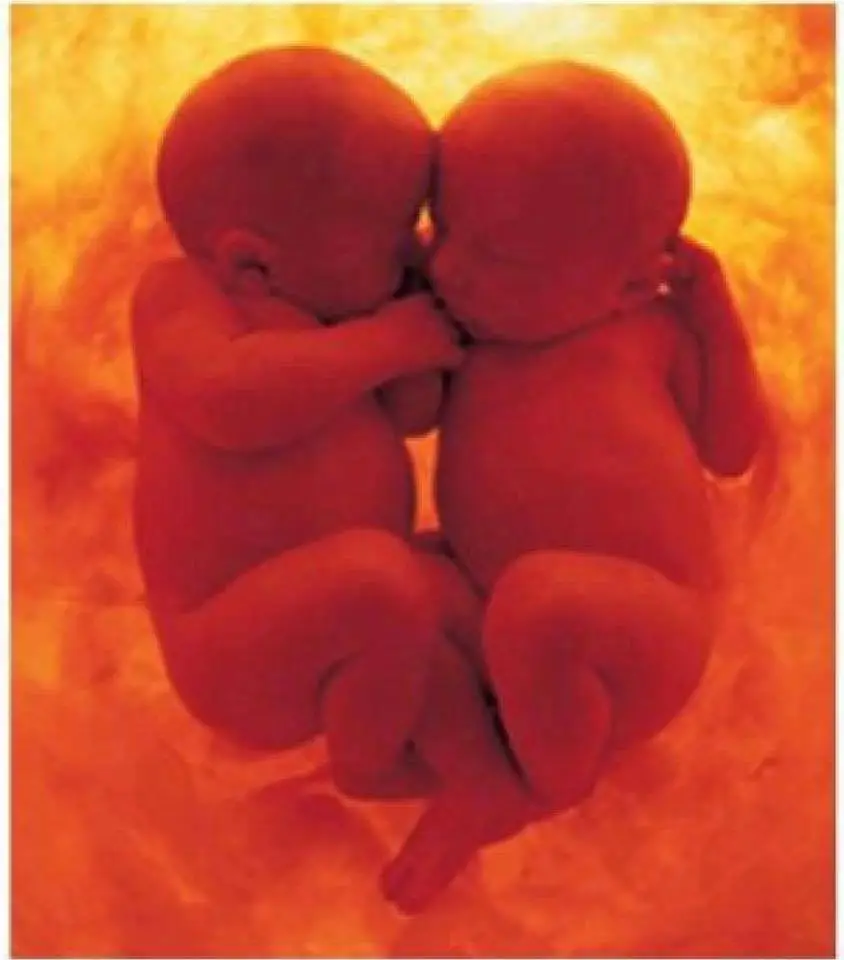
Two Babies
In a mother’s womb were two babies. One asked the other: “Do you believe in life after delivery?”The other replied, “Why, of course. There has to be something after delivery. Maybe we are here to prepare ourselves for what we will be later.”
“Nonsense,” said the first. “There is no life after delivery. What kind of life would that be?”
2 Chronicles 9:21—Did Solomon’s ships get gold from Tarshish or from Ophir?
Problem: Here the Chronicler affirms that Solomon’s ships “went to Tarshish” and brought back gold. However, in 1 Kings 9:28 it claims they “went to Ophir” and acquired gold.
2 Chronicles 7:12ff—Does God dwell in a chosen temple?
Problem: God told Solomon, “I have heard your prayer, and have chosen this place for Myself as a house of sacrifice” (v. 12), that “My name may be there forever” (v. 16). Yet, even Solomon in his dedicatory prayer acknowledged that God could not dwell in His temple, saying, “Behold, heaven and the heaven of heavens cannot contain You. How much less this temple which I have built!” (1 Kings 8:27). Other Scriptures likewise affirm that God does not “dwell in temples made with hands (Acts 17:24; cf. Isa. 66:1). Continue reading →