
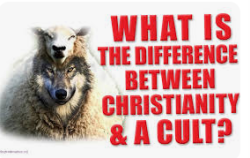
Understanding the distinction between mainstream Christianity and groups often classified as cults is a task that requires both theological precision and an awareness of social dynamics. For many, the lines can seem blurred by similar terminology or shared historical roots, but the foundational differences are often profound.
In a theological and sociological context, the “Christian vs. Cult” debate usually centers on three specific areas: authority, theology, and behavioral control.
1. The Source of Authority
The primary difference between a mainstream Christian denomination and a cultic group lies in where the “final word” resides.
Christianity: Historically, Christians hold to Sola Scriptura (Scripture alone) or a combination of Scripture, tradition, and reason. The authority is external to any living leader. If a pastor or priest says something that contradicts the Bible, the layperson has the theological standing to challenge it based on the text.
Cults: In contrast, cults almost always center on a charismatic, living leader or a specific, proprietary set of modern “revelations” that supersede the Bible. In these groups, the leader is the sole interpreter of truth. Disagreeing with the leader is equated to disagreeing with God.
The “New Revelation” Trap
Many cults began as offshoots of Christianity. They often claim that the Bible has been “corrupted” or that it is “incomplete,” requiring the leader’s unique insight to unlock its “true” meaning. This creates a dependency where the follower cannot understand God without the mediator.
2. The Theological “Litmus Test”
While Christian denominations vary widely on issues like baptism or church government, they almost all agree on the “Ecumenical Creeds” (such as the Nicene or Apostles’ Creed). Cults typically deviate in three specific areas:
The Nature of Christ
Traditional Christianity holds that Jesus is the second person of the Trinity—fully God and fully man. Most cultic groups redefine Jesus. They may claim he was:
A created being (an angel or a high-level human).
One of many gods.
A “spirit brother” of other supernatural beings.
The Gospel of Grace vs. Works
A hallmark of Christian theology is salvation by grace through faith. While “good works” are encouraged as a result of faith, they are not the currency used to buy salvation.
Cults, however, are almost universally legalistic. They require specific quotas—hours of proselytizing, financial “giving” beyond one’s means, or adherence to strict dietary and social laws—to maintain a right standing with the group and, by extension, God.
The Exclusivity of the Group
Mainstream Christians generally recognize that the “Body of Christ” exists across many denominations. A Baptist may disagree with a Lutheran, but they usually recognize each other as brothers and sisters in faith.
Cults maintain strict exclusivity. They teach that salvation is found only within their specific organization. If you leave the group, you are leaving God and heading toward destruction.
3. Sociological and Behavioral Red Flags
The term “cult” is not just a theological slur; it refers to a set of behaviors known as High-Control Dynamics. To distinguish between a healthy church and a cult, many experts use the BITE model (Behavior, Information, Thought, and Emotional control).
Isolationism
Healthy churches encourage members to be “salt and light” in the world, maintaining relationships with non-believing friends and family. Cults often practice “shunning” or “disfellowshipping.” Members are encouraged to sever ties with “worldly” people—even parents or children—who are not part of the group or who criticize the leader.
Information Control
In a standard Christian environment, members are encouraged to read various translations of the Bible, study history, and engage with difficult questions. Cults often forbid members from reading “apostate” literature (anything written by former members or critics). They create an information “bubble” where only group-approved sources are considered safe.
Financial Exploitation
While many churches pass a tithe plate, the pressure is generally internal or communal. Cults often demand full financial disclosure from members and may require “mandatory” donations that keep the member in a state of financial dependency on the group.
Summary Comparison Table
| Feature | Mainstream Christianity | Cultic Groups |
| Authority | The Bible (and established tradition) | A living leader or “new” secret writings |
| Jesus | The eternal, uncreated Son of God | A created being or one of many “ways” |
| Salvation | Gift of grace received through faith | Earned through loyalty and group works |
| Critics | Encouraged to engage and answer | Labeled as “enemies” or “demons” |
| Family | Emphasized as a primary blessing | Secondary to the leader; easily severed |
The Danger of “Theological Drift”
It is important to note that a group can be “orthodox” (having correct beliefs) but “orthopathic” (having abusive practices). Some churches may hold to the Bible but still exercise cult-like control over their members’ lives. Conversely, some groups may have odd beliefs but remain socially healthy and respectful of individual autonomy.
The ultimate protection against cultic influence is a deep, personal understanding of the source material. For the Christian, this means a rigorous study of the Bible that allows for critical thinking and the testing of all claims against established truth.
Key Takeaway: A healthy faith invites questions and points you toward a Higher Power; a cult forbids questions and points you toward a human leader.
