- The FORBIDDEN Book That Claimed Magicians Could Create Life - Liber Vaccae
 by Paulie Uncovered on September 26, 2026 at 7:06 pm
What if medieval magicians believed they had discovered a way to create life itself? Not through divine intervention, but through disturbing experiments involving animals, human biological material, and secret knowledge supposedly inherited from the ancient philosophers. That is the extraordinary promise of Liber Vaccae, also known as The Book of the Cow, one of the strangest magical texts to survive from the medieval world. Originally connected to the Arabic tradition of Kitab al-Nawamis and attributed to Plato, the book describes experiments that blur the boundaries between alchemy, natural philosophy, forbidden magic, and the creation of artificial life. Some of its most disturbing passages claim that magicians could manufacture living creatures possessing extraordinary abilities, hidden knowledge, or powers that ordinary human beings could never obtain. But why did anyone believe such things were possible? In this documentary, we explore the mysterious origins of Liber Vaccae, its journey from the medieval Arabic-speaking world into Europe, and the extraordinary beliefs about nature that made its experiments imaginable. We examine the ancient theory of spontaneous generation, the medieval fascination with artificial life, and the connection between Liber Vaccae, the Picatrix, and the wider world of Islamic and European occultism. Then we enter the darker side of the manuscript. Grotesque experiments, unnatural creatures, strange magical operations, and instructions that raised a terrifying theological question: could a human being imitate the creative power of God? The book attracted both fascination and condemnation. Some medieval thinkers approached such practices as a possible extension of natural philosophy, while others considered them dangerous violations of nature and religion. Yet one mystery remains. Was Liber Vaccae a genuine attempt to investigate the boundaries of life, a collection of impossible magical fantasies, or an elaborate expression of the medieval belief that nature contained hidden powers waiting to be discovered? Its surviving manuscripts preserve a world in which the distinction between science and magic was far less certain than it is today. And behind its most disturbing claims lies a question that humanity has never completely abandoned: If we could discover the secret machinery of life, would we have the right to create it ourselves?
- The Most Mysterious Illustrated Book in the Islamic World - Aja'ib al-Makhluqat
 by Paulie Uncovered on September 24, 2026 at 7:10 pm
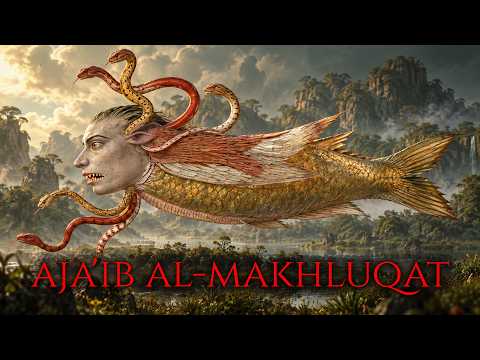
What if a medieval book claimed to reveal every wonder of creation, from the highest heavens to the strangest creatures hidden on Earth? In the thirteenth century, a Persian scholar named Zakariya al-Qazwini compiled one of the most extraordinary works of the medieval Islamic world: Aja'ib al-Makhluqat, or The Wonders of Creation. Its pages describe a universe filled with mysterious angels, celestial beings, enormous birds, dragons, strange animals, distant lands, and creatures that seem almost impossible to imagine. But this was not simply a collection of monsters. Al-Qazwini was attempting something much more ambitious: to document the wonders of God's creation, combining astronomy, geography, natural history, religious traditions, and extraordinary accounts gathered from earlier writers and travelers. In this documentary, we explore the mysterious world preserved inside Aja'ib al-Makhluqat. We begin in the heavens, examining the celestial spheres, the seven classical planets, and the extraordinary angels described in Islamic cosmology. Then we descend toward Earth, encountering supernatural beings, legendary creatures, unfamiliar animals, mysterious islands, and lands that medieval travelers claimed existed beyond the known world. The surviving illustrated manuscripts make this story even stranger. Their extraordinary paintings give faces and bodies to creatures that most people had never seen, turning descriptions of the invisible and unknown into some of the most fascinating images in medieval Islamic art. We also examine the connection between Aja'ib al-Makhluqat and other mysterious works such as Kitab al-Bulhan, exploring how medieval scholars understood astrology, supernatural beings, strange natural phenomena, and the relationship between the visible and invisible worlds. But where did genuine observation end and mythology begin? Some creatures described in these manuscripts resemble real animals. Others emerged from religious traditions, travelers' stories, or legends that had circulated for centuries. And some remain difficult to identify at all. For al-Qazwini, the universe was filled with wonders that revealed the extraordinary complexity of creation. For modern readers, his book opens a window into a world where science, religion, geography, and mythology had not yet been separated by the boundaries we recognize today. Was Aja'ib al-Makhluqat an encyclopedia of the natural world, a collection of ancient legends, or an attempt to document everything that might exist beyond ordinary human knowledge?
- The Most Mysterious Book of Prophecy in the Islamic World - Kitab al-Jafr
 by Paulie Uncovered on September 23, 2026 at 7:08 pm
What if there was a book containing secret knowledge of the future, passed down through generations of the Prophet Muhammad's family? In Islamic esoteric traditions, that mysterious book is known as Kitab al-Jafr. Traditionally associated with Ali ibn Abi Talib, the book is said to contain hidden knowledge, prophecies, and secrets concerning events that had not yet happened. In some Shia traditions, it became closely associated with the imams and the belief that certain forms of divine knowledge could be inherited by chosen individuals. But the mystery goes much deeper. Over the centuries, Jafr also became associated with an elaborate system of letters, numbers, numerical calculations, and predictions. Practitioners believed that the Arabic alphabet contained hidden relationships that could reveal the destinies of rulers, the rise and fall of empires, and even events preceding the end of the world. In this documentary, we explore the mysterious origins of Kitab al-Jafr, its traditional connection to Ali, and the role of Ja'far al-Sadiq, whose name became closely associated with Islamic esoteric knowledge. We examine the legends of the Red and White Jafr, the secret knowledge attributed to the imams, and the belief that certain prophetic mysteries were preserved beyond the reach of ordinary scholars. Then we enter the world of Ilm al-Jafr, where Arabic letters are converted into numbers, rearranged into mathematical patterns, and interpreted as possible clues to future events. The subject connects directly to Ilm al-Huruf, Ahmad al-Buni, Shams al-Ma'arif, and the wider tradition of Islamic occultism, where divine names, sacred letters, numerical systems, and hidden knowledge often overlap. But there is one enormous problem. The original Kitab al-Jafr has never been conclusively identified, and later manuscripts associated with its name contain traditions of different periods and disputed origins. Was there ever a single book containing all this secret knowledge? Were later mystics preserving an ancient tradition, or developing their own systems of prophecy around a legendary manuscript? And could numbers and letters really reveal events that had not yet taken place? Kitab al-Jafr remains one of the most mysterious books in Islamic esoteric history, a legendary manuscript whose reputation has survived far longer than any verifiable original.
- The Most Feared Mathematical Magic in the Islamic World - Awfaq
 by Paulie Uncovered on September 22, 2026 at 7:08 pm
What if numbers were more than a way to calculate the world? What if they could be arranged into patterns believed to unlock its hidden powers? For centuries, Islamic mystics, mathematicians, and occult practitioners explored a mysterious system known as Awfaq — the science of magic squares. These were no ordinary mathematical puzzles. Numbers, Arabic letters, divine names, and Quranic verses were arranged into carefully constructed grids. In certain esoteric traditions, these patterns were believed to hold spiritual power, attract protection, influence fate, and reveal hidden relationships between God and creation. At the center of this mysterious world stands Ahmad al-Buni, whose writings and the later traditions associated with him connected magic squares to Ilm al-Huruf, Abjad numerology, planetary correspondences, talismans, and the secret properties of the Names of God. But the deeper we go, the stranger the system becomes. A single divine name could be broken into letters, converted into numbers, and rearranged into a geometric pattern. Certain squares were associated with planets, angels, spiritual forces, and specific moments in time. Some practitioners believed these arrangements could offer protection, healing, success, or access to otherwise hidden knowledge. In this documentary, we explore the mathematical and mystical foundations of Awfaq, its connection to Shams al-Ma'arif, the Greatest Name of God, the Seal of Solomon, and the wider world of medieval Islamic occultism. We also examine the controversy surrounding these practices. Were magic squares a legitimate expression of sacred mathematics and divine knowledge, or did attempts to manipulate spiritual forces cross the boundary into forbidden magic? And why did genuine mathematical discoveries become so closely connected to talismans, astrology, and the supernatural? For some practitioners, Awfaq offered a way to understand the numerical harmony of creation. For others, it promised something far more extraordinary: the possibility of influencing that harmony. Were these squares simply numbers arranged on paper, or did their creators believe they had discovered the mathematical language of the invisible world?
- The Most TERRIFYING Seven Kings of the Jinn - Islamic Occultism
 by Paulie Uncovered on September 21, 2026 at 7:07 pm
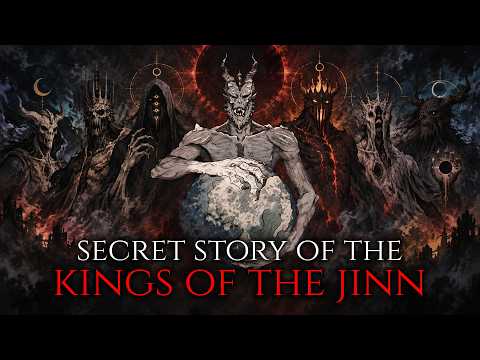
What if the invisible world was believed to have its own kings? In medieval Islamic occult traditions, certain manuscripts describe a strange hierarchy of supernatural rulers known today as the Seven Kings of the Jinn. They were not simply monsters. Each king was connected to a different day of the week, one of the seven classical planets, particular colors, metals, symbols, spiritual forces, and sometimes entire ranks of lesser beings believed to serve beneath them. In this documentary, we enter the world of Islamic occultism and trace where these seven kings came from, how they appeared in manuscripts, and why their names became associated with some of the darkest material in medieval magical literature. We explore figures such as the Red King, connected with Mars and Tuesday, alongside the other rulers linked to the Sun, Moon, Mercury, Jupiter, Venus, and Saturn. Some manuscripts portray them as terrifying supernatural monarchs. Others place them inside complicated systems involving angels, planetary forces, divine names, magic squares, talismans, and ritual timing. That is where the subject becomes much stranger. In Islam, jinn are not automatically evil. They are beings with free will, capable of belief, rebellion, deception, and everything in between. But occult texts sometimes describe certain jinn as rulers with servants, territories, ranks, and powers of their own, almost like an invisible kingdom existing beside the human world. We also look at the connection to Kitab al-Bulhan, the wider tradition surrounding Ahmad al-Buni, Shams al-Ma'arif, Ilm al-Huruf, awfaq, and the attempts of medieval occultists to organize the unseen world through names, numbers, planets, and symbols. But there is an important problem. There was never one perfectly fixed list. Names change between manuscripts. Correspondences shift. Later traditions add material that earlier sources do not contain. And mainstream Islamic belief in jinn is very different from attempting to summon, command, or bargain with them. So what exactly were the Seven Kings? Literal rulers of supernatural beings? Personifications of planetary forces? Symbols inside an occult system? Or something medieval practitioners genuinely believed could answer when called? The manuscripts never give us one clean answer. They leave us with seven thrones, seven planets, and a hidden world that was believed to exist just beyond ordinary human sight.
- The Most Dangerous Name in the Islamic World - Ism al A'zam
 by Paulie Uncovered on September 20, 2026 at 7:13 pm
What if there was a name of God so powerful that knowing it could change the way prayer, protection, and spiritual knowledge worked? In Islamic tradition, that mystery is known as Ism al-A'zam — the Greatest Name of God. For centuries, scholars, mystics, and esoteric thinkers tried to identify it. Some believed it was hidden among the familiar Names of God. Others searched for it inside particular Quranic verses, prayers, combinations of letters, or numerical patterns. And in Islamic occult traditions, the idea became even more mysterious: the Greatest Name was sometimes treated as a key capable of opening doors to hidden knowledge and extraordinary spiritual power. In this documentary, we trace the mystery of Ism al-A'zam through theology, Sufism, and Islamic esotericism. We explore the 99 Names of God, the belief that one Name may stand above the others, and the traditions claiming that prophets, saints, or spiritually advanced figures possessed knowledge of it. Then we enter the world of Ahmad al-Buni, where divine names become connected to Arabic letters, Abjad numbers, magic squares, talismans, and strange diagrams designed to reveal relationships hidden inside creation itself. That is where the line becomes difficult to draw. When does repeating a divine name remain prayer? And when does calculating, combining, or encoding sacred names become something closer to forbidden magic? The mystery connects directly to Ilm al-Huruf, Ilm al-Jafr, sacred numerology, and the belief that letters themselves may contain spiritual force. But after centuries of searching, there is still no single answer accepted by everyone. Is Ism al-A'zam one particular word? A divine formula? A hidden combination of letters? Or is the real secret not the Name itself, but the spiritual state of the person invoking it? Perhaps that is why the Greatest Name has remained one of the most guarded mysteries in Islamic spirituality. Everyone searches for the word. But the tradition keeps suggesting that the real mystery may be the person who becomes worthy of speaking it.
- The Most Dangerous Book That Catalogued Demons, Jinn and the Stars - Kitab al-Bulhan
 by Paulie Uncovered on September 19, 2026 at 7:06 pm
What if there was a medieval book that tried to map the invisible world? Not just the stars. Not just astrology. But jinn, strange spirits, planetary rulers, supernatural beings, talismans, omens, and forces believed to exist somewhere between heaven and Earth. That book is Kitab al-Bulhan. Created in the medieval Islamic world, the manuscript survives as one of the strangest visual records of occult cosmology ever produced. Its pages are filled with terrifying figures, celestial diagrams, zodiac imagery, planetary symbolism, and beings that look more like something from a nightmare than a scholarly text. But this was not simply a book of monsters. Behind the illustrations was a much larger system. Medieval astrologers believed the seven classical planets influenced events on Earth. Each planet could be associated with particular days, metals, colors, temperaments, hours, and spiritual forces. Certain beings were connected to those cosmic powers, and the right combinations of timing, symbols, numbers, and ritual actions were believed to produce real effects. In this documentary, we explore the hidden world inside Kitab al-Bulhan. We look at its strange representations of jinn and supernatural rulers, the planetary system behind them, the use of talismans and divination, and the blurred boundary between astronomy, astrology, medicine, magic, and religion in the medieval world. We also separate the manuscript itself from the mythology that grew around it later. Many of the creatures now circulated online as “Islamic demons” come from traditions far more complicated than that label suggests. In Islam, jinn are not automatically evil. They are beings with their own wills, capable of belief, rebellion, deception, and everything in between. And that makes the images even stranger. Were these creatures meant to be literal portraits of beings people believed existed? Symbols representing planets and invisible forces? Or visual tools designed to make the unseen structure of the universe easier to understand? The deeper you go into Kitab al-Bulhan, the less it looks like a simple book of demons. It starts to look like an attempt to draw a map of everything medieval people believed existed beyond ordinary human sight.
- The Most Dangerous Saints Sufis Believe Secretly Govern the World - Qutb, Abdal and Awtad
 by Paulie Uncovered on September 18, 2026 at 7:12 pm
What if the most powerful spiritual figures on Earth were people almost nobody could identify? In some Sufi traditions, the world is believed to contain a hidden hierarchy of saints who quietly preserve its spiritual balance. They are known by names such as the Qutb, the Abdal, and the Awtad. At the center stands the Qutb, the “Pole” — the saint believed to occupy the highest spiritual rank of his age. Around him are other hidden figures: the Awtad, or “Pillars,” and the Abdal, or “Substitutes,” whose numbers and functions differ depending on the Sufi source describing them. These are not kings, politicians, or public religious leaders. Their authority is invisible. In this documentary, we explore how Sufi writers developed the idea that certain saints could act as hidden supports of creation, channels of divine mercy, protectors of regions, and spiritual intermediaries whose presence helped keep the world in balance. We look at Ibn Arabi, whose writings gave some of the most detailed descriptions of these ranks, and at the strange connection between the hidden saints and figures such as Khidr, Jesus, Elijah, and Idris. The mystery becomes deeper with the Abdal. The word is often understood as “substitutes,” because when one dies, another is believed to take his place. The hierarchy continues, generation after generation, while most of humanity remains completely unaware of who these people are. But that raises an obvious problem. How can anyone verify a hierarchy whose most important members are deliberately hidden? For some Sufis, that is exactly the point. True spiritual power does not need recognition. For critics, however, elaborate systems of invisible saints go far beyond what can be clearly established from scripture and open the door to speculation, exaggeration, and claims of authority that cannot be tested. So what exactly are the Qutb, Abdal, and Awtad? Literal saints secretly maintaining the world? Symbols for different levels of spiritual realization? Or a mystical language for describing the belief that divine order is preserved through people nobody notices? And if the greatest saint alive today is supposed to remain hidden... would anyone even know if they had already met him?
- The Most Dangerous Science in the Islamic World - Ilm al-Huruf
 by Paulie Uncovered on September 17, 2026 at 7:13 pm
What if the Arabic alphabet was never just a system of writing? For more than a thousand years, certain Muslim mystics believed that letters carried numbers, divine names, cosmic relationships, and hidden forces woven into the structure of creation itself. This tradition became known as Ilm al-Huruf — the Science of Letters. To its practitioners, the twenty-eight Arabic letters were not dead symbols. They were living signs. Each letter had a numerical value. Each could correspond to divine names, planets, elements, spiritual states, and invisible relationships hidden beneath ordinary language. And some believed that if those relationships could be understood deeply enough, the letters could reveal far more than words. In this documentary, we explore the strange world of Ilm al-Huruf, from the Abjad numerical system and the mysterious disconnected letters of the Quran to the ninety-nine Names of God and the belief that creation itself could be understood as divine speech. We look at Ibn Arabi, who developed profound ideas about letters as expressions of existence, and Ahmad al-Buni, whose works connected sacred names, numbers, magic squares, talismans, and spiritual operations into one of the most controversial systems in Islamic esotericism. Then we move deeper. Ilm al-Jafr claimed hidden knowledge could be extracted through letters and numbers. Prophecies were calculated. Talismans were constructed. Divine names were rearranged and combined. And eventually movements like Hurufism pushed letter mysticism so far that the human face itself became a map of divine reality. But where did mysticism end and forbidden magic begin? Muslim scholars argued over that question for centuries. Some saw the science of letters as a legitimate attempt to understand the hidden structure of scripture and creation. Others saw dangerous occult practices hidden behind religious language. And that is what makes Ilm al-Huruf so difficult to classify. Was it magic? A mystical science? A way of decoding the Quran? Or were these thinkers genuinely convinced that letters were the smallest visible pieces of the machinery God used to build reality itself?
- The LAST Gnostic Religion Still Alive Today - Mandaeism
 by Paulie Uncovered on September 16, 2026 at 7:08 pm
What if one of the ancient Gnostic religions never actually disappeared? While movements like the Sethians, Valentinians, and Manichaeans vanished into history, the Mandaeans survived. They still exist today. For centuries, Mandaean communities lived along the rivers and marshlands of southern Iraq and southwestern Iran, preserving a religion built around light, water, hidden knowledge, and the belief that the human soul does not truly belong to this world. At the center of Mandaeism is a cosmic divide. There is the world of Light, associated with living, flowing water, and there is the world of darkness, tied to stillness, death, and matter. Human beings carry a spark from the higher realm, but that spark has become trapped inside the material world. The task of religion is to help it return. This documentary explores the Mandaean vision of the universe, the Great Life, the beings of the World of Light, and Ptahil, the figure associated with the creation of the flawed material world. We also look at the rituals that have allowed this ancient faith to survive. Baptism is not performed once. For Mandaeans, immersion in flowing water is repeated throughout life, because living water is itself sacred. Their priests conduct elaborate ceremonies for purification, marriage, death, and the journey of the soul through the celestial realms after the body is gone. Then there is John the Baptist. Mandaeans revere him as one of their greatest teachers, yet their understanding of Jesus is radically different from Christianity, presenting him not as the final savior but as a false or misleading figure within their own sacred tradition. That alone makes Mandaeism one of the strangest surviving links to the religious world of late antiquity. But survival has come at a cost. War, persecution, displacement, and the destruction of the Iraqi marshlands have scattered many Mandaeans across the world. A religion once deeply tied to specific rivers now has communities living in Europe, Australia, North America, and elsewhere. Which leaves a difficult question. Can a religion built around living water, sacred geography, and tightly preserved ritual survive when its people are forced into permanent exile? Mandaeism may be the last living Gnostic religion. The question is whether it can remain alive for much longer.
- The LOST Religion That Tried to Unite Jesus, Buddha and Zoroaster - Manichaeism
 by Paulie Uncovered on September 15, 2026 at 7:10 pm
What if one religion claimed that Jesus, Buddha, and Zoroaster were all part of the same unfinished story? In the third century, a Persian prophet named Mani believed exactly that. He taught that the universe was locked in an ancient struggle between two eternal forces: Light and Darkness. Human beings were caught in the middle, carrying fragments of divine light trapped inside the material world. Mani did not see himself as simply another teacher. He believed he was the final messenger in a chain that had already included figures such as Jesus, Buddha, and Zoroaster, and he deliberately tried to build a religion capable of spreading across cultures, languages, and empires. For a time, it worked. Mani gained royal protection in Persia, created his own scriptures, used painted books to communicate his teachings, and sent missionaries in every direction. But after the political situation changed, his enemies turned the king against him. Mani was imprisoned and died under persecution. His religion did not. Manichaeism spread west into the Roman Empire, where a young Augustine of Hippo followed it for roughly nine years before becoming one of its most influential critics. To the east, the faith traveled even farther. It moved along the Silk Road, became the official religion of the Uyghur Khaganate, entered China as the Religion of Light, and survived in forms that sometimes had to disguise themselves inside other religious traditions. But nearly everywhere it went, persecution eventually followed. Persian authorities opposed it. Christian Rome attacked it. Later Islamic governments restricted and persecuted Manichaean communities. In China, repeated bans pushed it further underground. Eventually, a religion that once stretched from the Mediterranean to China almost disappeared. For centuries, most of what people knew about Manichaeism came from the people who hated it. Then buried manuscripts began to reappear. Texts discovered in Central Asia, Egypt, and China allowed Mani and his followers to speak again in their own words, revealing a far more complex religion than the caricature preserved by its enemies. This documentary traces that entire rise and collapse, from Mani's claim to universal revelation to the religion's survival at the edges of the world, and the possible echoes of its radical dualism in later movements such as the Cathars. The religion vanished. But its name did not. Even today, “Manichaean” is used to describe a worldview that divides everything into absolute good and absolute evil. Which leaves one final irony: A religion destroyed partly for seeing the universe as a war between Light and Darkness is still remembered through that exact idea.
- The King Who Fed Human Brains to Serpents - Zahhak
 by Paulie Uncovered on September 14, 2026 at 7:03 pm
What kind of man becomes a monster without ever being forced to? That is the story of Zahhak, one of the darkest figures in the Shahnameh, the great Persian epic of Ferdowsi. The story begins with a prince who is not born evil. He is young, weak, easily influenced, and surrounded by people who know exactly how to use that weakness. Ahriman approaches him again and again, never with chains, never with threats, but with small offers that seem harmless in the moment. A promise. A meal. A favor. A cure. And each choice takes Zahhak one step further. Eventually, two serpents grow from his shoulders. They cannot be cut away. They cannot be killed. And according to the story, they must be fed the brains of young men every day. From there, Zahhak becomes something far worse than a cursed prince. He becomes a king. This documentary follows his rise, the fall of Jamshid, the thousand-year reign of terror that follows, and the ordinary people crushed beneath it. At the center of the resistance stands Kaveh the Blacksmith, a father who has already lost nearly all of his sons and finally reaches the point where fear becomes anger. His torn leather apron becomes a banner, and what begins as one man refusing to obey grows into open revolt. But Zahhak’s story is not just about a tyrant. It is about how tyranny begins. No one drags him into evil. No one forces him to become what he becomes. He keeps accepting one reasonable-looking choice after another until the horror around him feels normal. And when he is finally defeated, the story does not allow him a clean death. He is bound beneath Mount Damavand, left alive inside the mountain. Because the deeper message of the myth is not that evil disappears. It is that hunger can be contained, but never completely destroyed. And maybe that is what makes Zahhak’s story so disturbing. The serpents are terrifying. But the real horror is how easy it was for him to become the man who fed them.
- The Visionary Who Claimed Aliens Put Something in His Brain - Paul Laffoley
 by Paulie Uncovered on September 12, 2026 at 7:08 pm
What happens when an artist spends his entire life trying to map realities most people do not believe exist? Paul Laffoley was an architect, painter, mystic, inventor, and one of the strangest visionary artists of the twentieth century. His work looked less like paintings and more like machines. Huge geometric diagrams filled with handwritten notes, cosmic systems, time travel, architecture, alien communication, the structure of consciousness, and the end of the universe. Then, in 1992, his story became even stranger. During a routine medical scan before oral surgery, doctors reportedly discovered a small metallic object lodged deep inside his brain near the pineal region. There was no obvious entry wound and no simple explanation for how it got there. Laffoley did not go looking for an ordinary answer. He contacted a UFO research group, and came to believe the object may have been some form of alien technology. But that incident was only one chapter in an already extraordinary life. In this documentary, we trace Laffoley from his unusual childhood, his architect father who claimed gravity was not real, his obsession with space and architecture, his years at Brown and Harvard, and the mental collapse that led to electroshock treatment and experiences he believed opened the door to other states of consciousness. We follow him through New York, his work connected to the World Trade Center, his apprenticeship under Frederick Kiesler, and eventually the tiny Boston room where he surrounded himself with thousands of books and spent years constructing his enormous diagram-paintings by hand. Laffoley believed some of these works were more than art. He called them psychotronic devices. He designed time machines, alien communication systems, living buildings, strange cosmologies, and what he saw as practical tools for interacting with dimensions beyond ordinary human perception. To some people, he was clearly delusional. To others, he was a genuine visionary whose ideas were simply too strange for the time in which he lived. And that is where the real question begins. Was Paul Laffoley a brilliant mind trying to describe realities the rest of us could not see? Or was he building an entire universe out of trauma, obsession, and belief? The metal object in his brain was never enough to prove his story. But it was enough to make the story much harder to forget.
- The Artist Who Turned Psychedelic Visions Into a Religion - Alex Grey
 by Paulie Uncovered on September 10, 2026 at 7:29 pm
What happens when an artist stops treating a vision as inspiration and starts building an entire spiritual world around it? That is the strange story of Alex Grey, the visionary artist whose paintings of glowing bodies, exposed anatomy, energy fields, and cosmic consciousness became some of the most recognizable images in modern psychedelic culture. The story begins in 1975. Grey was twenty-one, broke, directionless, and openly challenging a God he did not believe in to reveal itself. Within a day, he took LSD for the first time and experienced a vision of a spiral moving from darkness through grey and into light. That same night, he met Allyson Grey, who would become his wife, collaborator, and one of the most important figures in his life. From there, his art changed completely. Grey spent years working around cadavers at Harvard Medical School and in mind-body medicine, giving him an unusually precise understanding of the human body. He then combined that anatomy with mystical imagery, psychedelics, meditation, and the belief that consciousness could somehow extend beyond the physical form. The result was Sacred Mirrors, a series that took roughly a decade to complete and became the foundation of his entire spiritual vision. Then his work escaped the gallery. His collaborations with TOOL, including artwork connected to Lateralus, Parabola, and Net of Being, introduced his imagery to millions. His paintings spread through tattoos, festivals, psychedelic culture, and the growing modern interest in altered states of consciousness. But Alex Grey did not stop at painting visions. Together with Allyson, he created the Chapel of Sacred Mirrors, and later Entheon, turning visionary art into something much closer to a spiritual institution. Psychedelic relics, sacred objects, ceremonies, paintings, and community all began to occupy the same space. That is where the question becomes harder. Is Alex Grey simply an artist who paints experiences produced by psychedelics? A genuine modern mystic? A religious figure? Or someone who discovered that art, altered states, and spiritual hunger could be fused into something that sits somewhere between all three? Critics see a culture built too closely around drugs, gurus, and unverifiable experiences. Supporters see a man trying to give visual form to states of consciousness that mystics have struggled to describe for centuries. Grey’s work never makes that tension easy to resolve. Maybe that is why people react to it so strongly. Because when you look at one of his paintings, you are not only looking at what he claims to have seen. You are also revealing what you already believe about visions, consciousness, and where religion actually begins.
- The Sufi Teaching About a Darkness That Shines - The Luminous Void
 by Paulie Uncovered on September 9, 2026 at 7:08 pm
What if the final stage of the spiritual path is not light, but a darkness so pure that it shines? That paradox sits at the heart of one of the strangest teachings in Sufi mysticism. This documentary begins with Najm al-Din Kubra, the thirteenth-century mystic who refused to flee when the Mongols descended on Gurganj. A respected scholar of law and hadith before becoming a spiritual master, Kubra developed a method centered on isolation, repetition of the names of God, and the observation of inner lights that appeared during intense mystical practice. To Kubra, those colors were not random. They were signs. Each color revealed something about the seeker's inner condition and how far they had traveled along the path. His successor Ala al-Dawla Simnani developed the idea further, describing a ladder of inner centers linked to prophets, spiritual states, and colors. Near the summit appears the most mysterious stage of all: black light. Not ordinary darkness. A luminous darkness. A blackness associated not with ignorance, but with a reality so overwhelming that ordinary perception can no longer describe it as light at all. But there is a danger hidden inside the teaching. There are two kinds of blackness: the darkness of the ego and material attachment at the beginning of the path, and the divine darkness near its end. To someone who does not understand the difference, the lowest and highest states can appear almost identical. From there, the mystery widens. Christian mystics wrote of a “dazzling darkness.” Kabbalistic texts spoke of hidden light within darkness. Meister Eckhart, The Cloud of Unknowing, Tibetan traditions, and other mystical systems arrived at strangely similar images despite emerging in very different worlds. Why? Were these mystics reaching the same reality through different languages? Was the human brain simply producing similar experiences under extreme spiritual practice? Or is luminous darkness what happens when language reaches something it can no longer describe? We also look at the modern echoes, from neurological explanations of light seen in darkness to the strange visual similarity between mystical diagrams and the glowing ring surrounding a black hole. At the center of it all is the Sufi idea of annihilation: the self disappears, but awareness does not. And perhaps that is why the final image is not a blinding light. It is a darkness that somehow shines.